







In September 1985, a significant international agreement known as the Plaza Accord was signed in New York City. This joint agreement involved five major industrial nations: France, West Germany, Japan, the United Kingdom, and the United States. The primary objective of the Plaza Accord was to address the substantial appreciation of the U.S. dollar and the growing U.S. trade deficit by orchestrating a depreciation of the dollar against other key currencies,
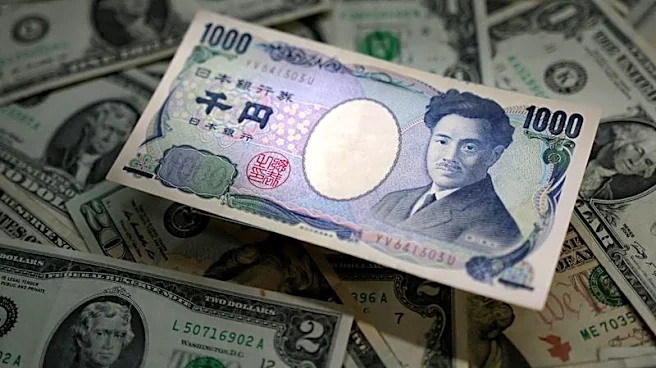
particularly the Japanese yen and the German Deutsche Mark. This intervention in currency markets marked a notable shift in international economic policy, moving away from the free-market stance previously held by some U.S. officials.
The Dollar's Ascent and Mounting Pressure
The period leading up to the Plaza Accord saw the U.S. dollar experience a dramatic rise in value. From 1980 to 1985, the dollar appreciated by approximately 50% against the Japanese yen, Deutsche Mark, French franc, and British pound. This strong dollar was partly a result of the tight monetary policy implemented by Federal Reserve Chairman Paul Volcker, which raised long-term interest rates, and the expansionary fiscal policy of President Ronald Reagan's first term (1981–1984). High interest rates attracted significant capital inflow into the U.S., further boosting the dollar's value.
While a strong dollar offered benefits, such as increased purchasing power for U.S. consumers and companies, it also created considerable difficulties for American industries. U.S. manufactured goods became more expensive and less competitive in international markets, leading to a decline in exports. Conversely, imported products became cheaper in the U.S., contributing to a rapidly expanding trade deficit. By 1984, the U.S. trade deficit had reached $112.5 billion, a sharp increase from $19.8 billion in 1980. This situation prompted a broad alliance of American manufacturers, service providers, and farmers, including major players like grain exporters, the U.S. automotive industry, heavy manufacturers such as Caterpillar Inc., and high-tech companies like IBM and Motorola, to launch a high-profile campaign advocating for protection against foreign competition.
Shifting U.S. Policy and the Path to Agreement
Initially, the U.S. government, particularly Treasury Secretary Donald Regan and Under Secretary for Monetary Affairs Beryl Sprinkel, resisted calls for currency intervention. They viewed the strong dollar as a sign of confidence in the U.S. economy and favored a free-market approach. However, as the dollar's appreciation continued and the trade deficit worsened, the Reagan administration's perspective began to change. The growing pressure from American industries and the increasing likelihood of protectionist legislation being considered by Congress spurred the White House to seek a different solution.
In January 1985, James Baker became the new Treasury Secretary, bringing with him a new team, including Richard Darman as Deputy Secretary of the Treasury and David Mulford as Assistant Secretary for International Affairs. This new leadership was more open to currency intervention. The negative prospect of trade restrictions ultimately motivated the U.S. to initiate the negotiations that culminated in the Plaza Accord. The agreement was signed on September 22, 1985, at the Plaza Hotel in New York City, hence its name. The signatories included Gerhard Stoltenberg for West Germany, Pierre Bérégovoy for France, James Baker for the United States, Nigel Lawson for Britain, and Noboru Takeshita for Japan.
Immediate Outcomes and Subsequent Developments
The Plaza Accord proved successful in its immediate goal of depreciating the U.S. dollar. Following the agreement, the dollar depreciated significantly, continuing its decline until it was eventually replaced by the Louvre Accord in 1987. The dollar's value against the yen, for instance, fell by over 51% from the time of the Plaza Accord. This devaluation was intended to reduce the U.S. current account deficit, which had reached 3.5% of the GDP, and to help the U.S. economy recover from a recession that began in the early 1980s. While the accord was effective in reducing the U.S. trade deficit with Western European nations, it largely failed to alleviate the trade deficit with Japan. This was attributed to structural conditions in Japan that were less sensitive to monetary policy, specifically trade conditions and Japan's import restrictions. The Louvre Accord was subsequently signed in 1987 to halt the dollar's continued decline, indicating the dynamic and often unpredictable nature of international currency management.