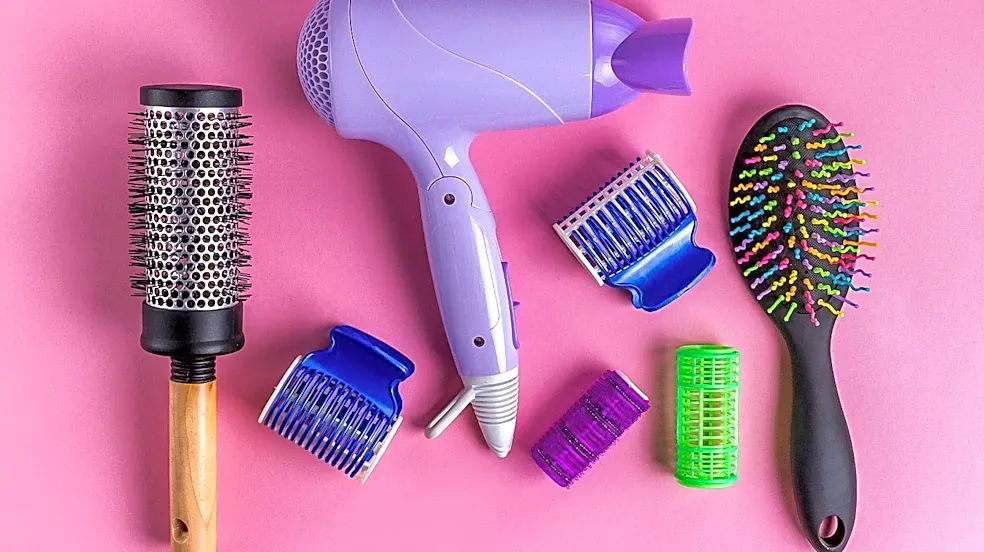





Hair rollers, often simply called hair curlers, are small, cylindrical tools designed to impart curl to a person's hair. These devices operate on a fundamental scientific principle involving the hair's internal structure. When hair is heated and rolled, it undergoes a temporary change where the hydrogen bonds within each hair's cortex are strained and broken. This process allows the hair to take on a new, curled shape. The hydrogen bonds then reform
once the hair is moistened, helping to set the curl. The diameter of these rollers can vary significantly, typically ranging from approximately 0.8 inches (20 mm) to 1.5 inches (38 mm), allowing for different curl sizes and styles.
The Mechanics of Hair Curling
The core mechanism behind hair rollers involves manipulating the hydrogen bonds present in the hair's cortex. These bonds are crucial for maintaining the hair's natural shape. When heat is applied, often through a hot roller or a hair dryer after the rollers are in place, these bonds become pliable. Rolling the hair around the cylindrical form of the roller then physically strains and breaks these bonds, forcing the hair into a new, curved configuration. Once the hair cools and dries in this new shape, the hydrogen bonds reform, effectively "setting" the curl. However, this change is not permanent; exposure to moisture can cause the hydrogen bonds to break and reform again, allowing the hair to revert to its original state or take on a new shape.
To enhance the longevity of the curl, hair spray can be used. This product helps to temporarily fix the curled hair in place, providing a more lasting style. The process of heating and then cooling the hair while it is held in a specific shape is a common technique in hairstyling, and hair rollers are a classic example of this principle in action.
Historical Innovations and Cultural Impact
The history of hair rollers includes significant innovations that made them more accessible and efficient. In 1930, Solomon Harper introduced the first electrically heated hair rollers, a groundbreaking development that streamlined the curling process. He further refined his design in 1953, improving the technology and user experience. These advancements made it easier for individuals to achieve curled hairstyles at home, contributing to their widespread popularity.
Beyond their functional role, hair rollers also gained cultural significance, particularly in the mid-20th century. They became a symbol of femininity and beauty standards. This symbolic role was notably highlighted during the feminist Miss America protest in 1968. Protesters at this event symbolically discarded various feminine products, including hair rollers, into a "Freedom Trash Can." These items were collectively referred to as "instruments of female torture" and "accoutrements of what they perceived to be enforced femininity," reflecting a broader critique of societal expectations placed upon women regarding their appearance. This act underscored the cultural weight and sometimes contentious role that beauty tools like hair rollers held in defining and challenging gender norms.