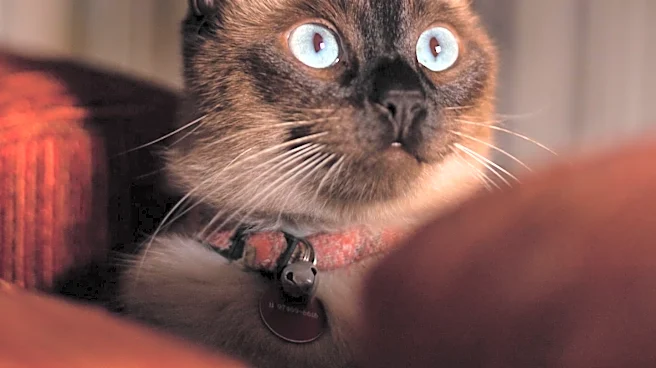








The Tonkinese cat, a breed recognized for its distinctive appearance and lively personality, has a fascinating history that spans centuries and continents. While officially established as a distinct breed in 2001, its lineage can be traced back to cats brought to the West in the 19th century. These early felines, sometimes referred to as 'chocolate Siamese,' laid the groundwork for what would become the modern Tonkinese, showcasing a blend of traits
that captivated breeders and cat enthusiasts alike.
Early Discoveries and Recognition
In the 19th century, cats imported from Malaysia began to draw attention for their unique characteristics. Breeders observed that some of these cats possessed aquamarine eyes and coats that were darker than those typically seen in Siamese cats. This distinct coloration and eye color set them apart, hinting at a different genetic makeup than their more common counterparts. The Siamese Cat Club, in 1901, acknowledged these cats, classifying them as a 'chocolate' type of Siamese, an early step in recognizing their unique qualities.
It is widely believed that many of the foundational cats used to establish both the Siamese and Burmese breeds in the West actually carried Tonkinese traits. A notable example is Wong Mau, a cat thought to have Tonkinese characteristics, who played a significant role in the development of these breeds. For a period, cats with Tonkinese features were bred but often registered as either Burmese or Siamese, indicating that their distinct identity was not yet fully appreciated or formally recognized.
The Path to Breed Recognition in Canada
The mid-20th century marked a turning point for the Tonkinese. It was not until the 1950s that breeders began to take a dedicated interest in these cats as a separate entity. This renewed focus led to collaborative efforts among breeders to develop specific breeding lines, aiming to preserve and enhance the unique traits of these felines. Their diligent work culminated in a significant milestone by 1965, when the Tonkinese was officially recognized as a distinct breed in Canada.
This Canadian recognition was pivotal, as it was from this point that the name "Tonkinese" originated, solidifying its identity. The name itself is a reference to the Tonkin region of Indochina, though it is important to note that this is merely a suggestive reference, as the cats themselves have no direct historical connection to that specific geographical area. The Canadian recognition provided a formal framework for the breed's development and paved the way for its broader acceptance.
Modern Crossbreeding and Global Establishment
The modern Tonkinese cats we see today are largely the result of independent crossbreeding programs undertaken by two dedicated breeders: Margaret Conroy of Canada and Jane Barletta of the United States. Working separately, their shared goal was to create an ideal combination of the distinctive appearance and lively personalities found in both the Siamese and Burmese parent breeds. Their efforts were focused on meticulously blending the best characteristics of these two well-known breeds to produce a new, harmonious feline.
Through their careful breeding programs, Conroy and Barletta successfully developed cats that embodied the desired traits. These cats, initially classified as crossbreeds, eventually gained enough consistency and recognition to be elevated to the status of an established breed. This official recognition occurred in 2001, marking a significant achievement for the Tonkinese. This final step cemented the Tonkinese's place in the world of domestic cat breeds, acknowledging its unique heritage and the dedicated work of those who championed its development.