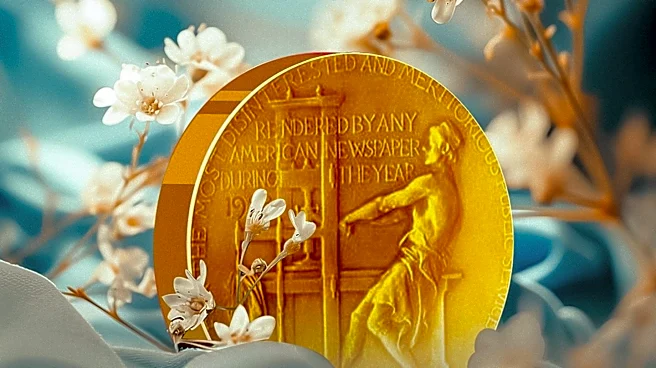

The Pulitzer Prize for Poetry stands today as a significant American award for distinguished verse. However, its journey to becoming one of the seven annual Pulitzer Prizes for Letters, Drama, and Music
was not immediate. The award was first formally presented in 1922, a full five years after the initial Pulitzer Prizes were distributed in other categories. This delay was primarily due to the fact that Joseph Pulitzer's original will, which established the prizes, did not specifically mention poetry as a category.
Early Recognition and the Role of The Poetry Society
Before the official establishment of the Pulitzer Prize for Poetry, there were earlier efforts to recognize poetic achievement within the Pulitzer framework. In the 1918 and 1919 Pulitzer cycles, three Pulitzer Prize Special Citations and Awards were given for poetry books. These early recognitions were known at the time as the Columbia University Poetry Prize and were notably funded by "a special grant from The Poetry Society." This highlights the crucial role that external organizations played in bringing poetry into the orbit of the prestigious awards.
One of the earliest recipients of such an award was Sara Teasdale, whose collection *Love Songs* received recognition in 1918. The following year, Carl Sandburg's *Cornhuskers* and Margaret Widdemer's *The Old Road to Paradise* were also honored. These special citations paved the way for the eventual formalization of the poetry prize, demonstrating a growing acknowledgment of poetry's importance within American literature.
The Formal Establishment and Initial Surprises
The year 1922 marked a turning point with the first official Pulitzer Prize for Poetry. This award was designated for a distinguished volume of original verse by an American author, published during the preceding calendar year. The inaugural winner was Edwin Arlington Robinson for his *Collected Poems*.
Harriet Monroe, the founding publisher and long-time editor of *Poetry* magazine, captured the sentiment of the time in an editorial published between April and September of 1922. She expressed that the award to Robinson was "a most agreeable surprise, as this is the first Pulitzer Prize ever granted to a poet." Monroe also clarified a common misconception, noting that when the Poetry Society of America had given its first annual five hundred dollars to Sara Teasdale's *Love Songs* four years prior, the award, though made in conjunction with the Pulitzer prizes, was often falsely attributed to the same origin. This distinction underscores the separate funding and origins of the earlier special grants versus the later, formally endowed prize.
A Legacy of Distinguished Verse
Since its formal inception, the Pulitzer Prize for Poetry has become a cornerstone of literary recognition in the United States. In its first 92 years, up to 2013, the award was given 92 times, with two awards in 2008 and no award in 1946. The prize has celebrated a wide array of American poets, with some, like Robert Frost, achieving multiple wins. Frost, for instance, won the prize four times, a testament to his enduring impact on American poetry. The consistent recognition of poetic excellence through this award has solidified its place as a premier honor in American letters.