
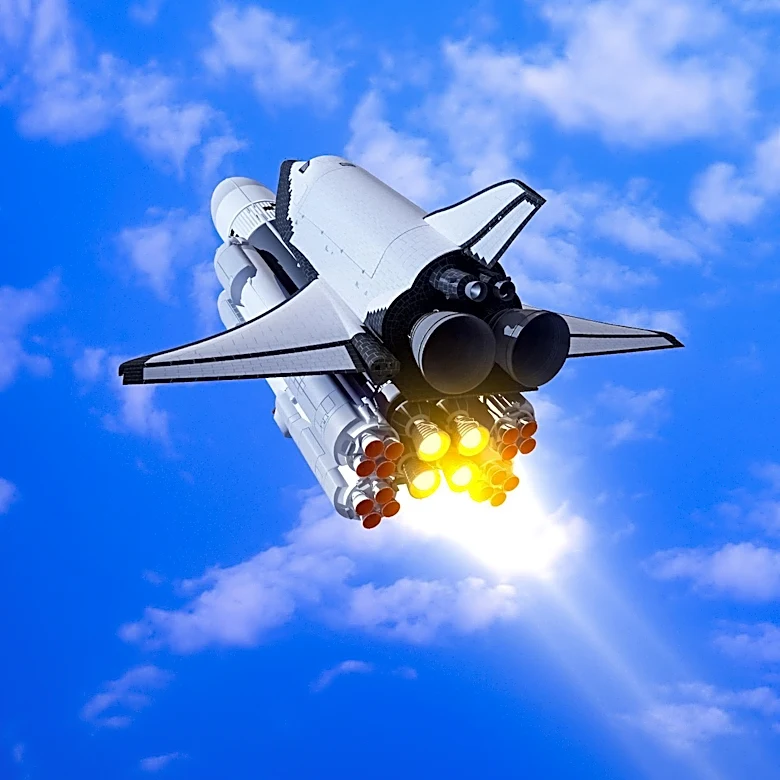








The Space Shuttle Challenger disaster was a result of multiple technical failures, primarily involving the shuttle's solid rocket boosters. This article delves into the technical aspects that led to the tragic event, focusing on the O-ring failure and its consequences.
The Role of O-rings
O-rings were critical components in the shuttle's solid rocket boosters, designed to prevent hot gases from escaping through the joints. Each booster had three field joints, with two
O-rings per joint. During tests in 1977, it was discovered that the pressure inside the boosters caused the steel parts to bend, breaking the O-ring seals. This phenomenon, known as "joint rotation," allowed hot gases to escape, potentially leading to an explosion.
Despite these findings, NASA did not consider the issue serious, as the O-rings were thought to form a seal under lift-off forces, a process called "extrusion." However, engineers noticed that blow-by of hot gases was more prevalent in cold temperatures, a factor that played a crucial role in the Challenger disaster.
The Launch Conditions
On the morning of the launch, the temperature was a frigid 31°F, well below the threshold for the O-rings to function properly. Engineers argued against the launch, but NASA commanders believed the backup O-ring would suffice. This decision proved fatal, as the cold caused the O-rings to freeze and fail to seal.
During the launch, smoke was seen coming from the aft field joint of the right booster, indicating that the O-rings were compromised. Although a temporary seal formed from aluminum oxide, the damage was done, and the shuttle was vulnerable.
Catastrophic Failure
At 73 seconds into the flight, the aluminum seal broke, allowing burning rocket fuel to escape. This created a plume of fire that burned through the external fuel tank, leading to a massive explosion. The structural integrity of the shuttle was compromised, and it broke apart due to aerodynamic forces.
The disaster highlighted the importance of addressing technical vulnerabilities and the consequences of ignoring engineering concerns. The Challenger disaster serves as a cautionary tale for the aerospace industry, emphasizing the need for rigorous testing and adherence to safety protocols.