








The Burmilla, a distinctive breed of domestic cat, owes its existence to a serendipitous event in the United Kingdom in 1981. This breed emerged from an accidental mating between a Chinchilla Persian and a Burmese cat, an unexpected pairing that ultimately led to the creation of a new and recognized feline lineage. The story of the Burmilla highlights how chance encounters can sometimes lead to significant developments in the world of animal breeding,
transforming an unforeseen incident into the foundation of a beloved breed.
The Fortuitous Encounter
The origin of the Burmilla can be traced back to the cattery of Miranda von Kirchberg. In 1981, two cats, a Chinchilla Persian kitten named Jamari Sanquist and a lilac Burmese named Bambino Lilac Fabergé, were housed in separate rooms, each awaiting a partner. However, one night, a cleaner inadvertently left a door open, allowing the two cats to meet and mate.
This unplanned union resulted in the birth of four kittens. All four were shorthair silver shaded females, named Galatea, Gemma, Gabriela, and Gisella. Their unique appearance immediately impressed von Kirchberg, who recognized the potential in these accidental offspring. This initial litter became the crucial starting point for what would soon be known as the Burmilla breed.
Developing a New Breed Standard
Impressed by the kittens' appearance, Miranda von Kirchberg contacted her friend and fellow breeder, Therese Clarke, who shared her excitement about the unique litter. Together, they embarked on the journey to develop these kittens into a new, recognized breed. Clarke adopted Gemma, while von Kirchberg kept Galatea, and these two females served as the foundational cats for the breed's first lines.
Standards for the Burmilla were officially produced in 1984, just a few years after the breed's accidental inception. This rapid development underscores the enthusiasm and dedication of the breeders involved. The breed's distinct characteristics, stemming from its Persian and Burmese heritage, were carefully documented to ensure consistency and recognition.
Gaining Recognition and Expanding Traits
The Burmilla achieved championship status in the United Kingdom in the 1990s, a significant milestone that solidified its place among established cat breeds. It is now recognized by various cat registries globally, including the CFA, FIFe, ACF, CCA-AFC, and GCCF, indicating its widespread acceptance and popularity.
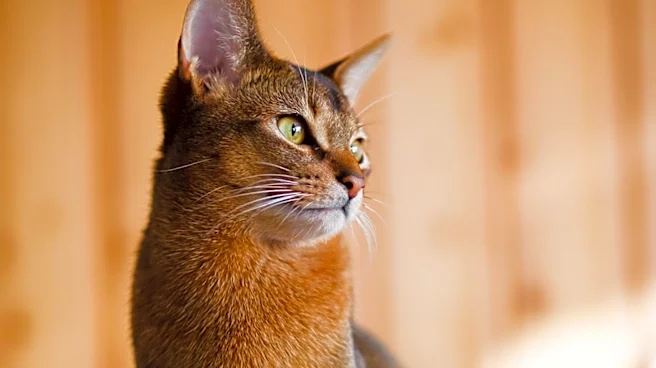
Initially, only silver shaded and silver tipped varieties were recognized by several major registries. However, as the breed developed, golden shaded and golden tipped Burmillas also gained recognition in FIFe and ACF registries by late 2011. The breed's coat patterns are primarily tipped and shaded, referring to the depth of color pigmentation on the hair. Tipped Burmillas have a light dusting of color over a silver or golden undercoat, sometimes appearing almost white in silver varieties. Shaded Burmillas have a quarter to half of their hair length pigmented, creating a mantle of color over their back, shoulders, and legs. This evolution in recognized colors and patterns demonstrates the ongoing development and refinement of the Burmilla breed since its accidental beginnings.