








The Railway Post Office (RPO) was a revolutionary service in the United States that transformed mail delivery by sorting mail en route on trains. This service, which began in the mid-19th century, played a crucial role in the development of the postal system, allowing for faster and more efficient mail distribution across the country. However, by the late 20th century, the RPO had become obsolete, leading to its eventual discontinuation.
The Birth of the Railway Post Office
The concept
of the Railway Post Office was introduced in the United States on July 28, 1862, with the first route established between Chicago, Illinois, and Clinton, Iowa. This innovative service allowed mail to be sorted while in transit, significantly speeding up the delivery process. The RPO was staffed by highly trained postal clerks who were responsible for sorting mail for various destinations along the train's route.
The success of the initial RPO routes led to rapid expansion, and by the 1880s, RPO cars were operating on the majority of passenger trains in the United States. The network of interconnected routes allowed for mail to be transported and delivered in a remarkably short time, with some routes employing as many as a dozen clerks in a single RPO car.
Peak and Decline of the RPO Service
At its height, the Railway Post Office service operated on over 9,000 train routes, covering more than 200,000 route miles in North America. The service was a vital component of the U.S. postal system, with many railways operating solid mail trains between major cities, often carrying hundreds of tons of mail daily.
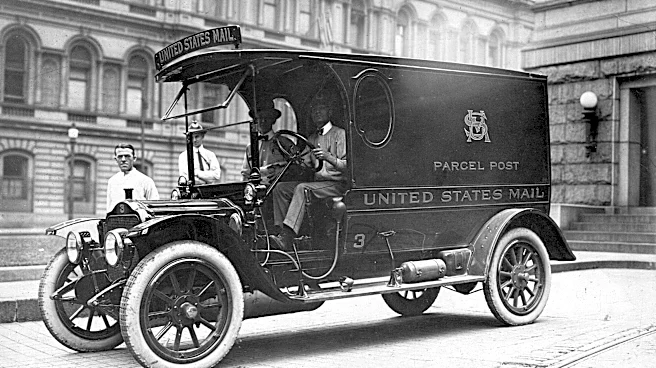
However, the decline of the RPO began after 1948, as the postal system started to shift towards more centralized sorting facilities. The introduction of the Highway Post Office (HPO) in 1942 further contributed to the decline, as these vehicles served similar purposes along routes where passenger train service was not available.
The End of an Era
The final blow to the Railway Post Office came in the 1960s when the Post Office Department decided to process mail in large regional centers using machines rather than people. This shift led to the phasing out of RPO routes, and by June 30, 1977, the last surviving railway post office running on rails between New York and Washington, D.C., was discontinued.
The legacy of the Railway Post Office lives on in the many preserved RPO cars found in railroad museums across North America. These relics serve as a testament to a bygone era when the RPO was a vital part of the U.S. postal system, revolutionizing mail delivery and connecting communities across the nation.