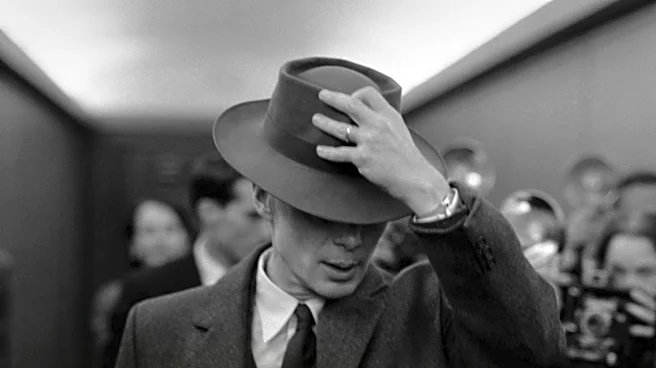








"The Life of Emile Zola," released in 1937, is a film that not only achieved critical and financial success but also holds a place of cultural and historical importance. Directed by William Dieterle and featuring Paul Muni in the lead role, the film explores the life of the renowned French author Émile Zola. Its impact extends beyond the cinematic realm, touching on significant historical and cultural themes.
Cultural Impact and Preservation
The film's cultural significance is underscored
by its selection for preservation in the United States National Film Registry in 2000. This honor is reserved for films that are deemed "culturally, historically, or aesthetically significant," highlighting the lasting impact of "The Life of Emile Zola." The film's ability to resonate with audiences across generations speaks to its powerful narrative and artistic achievements.
At the time of its release, the film was interpreted by some as an indirect critique of Nazi Germany. Certain scenes were seen as "indirect attacks" on the regime, adding a layer of contemporary relevance to the historical narrative. This interpretation allowed the film to serve as both a historical account and a commentary on the political climate of the 1930s.
Historical Context and Themes
"The Life of Emile Zola" is set against the backdrop of the Dreyfus affair, a significant event in French history. The film explores Zola's involvement in the affair, highlighting his role as a champion of justice and truth. This narrative is particularly poignant given the film's release during a time of rising nationalism and political tension in Europe.
The film's portrayal of Zola's life and the Dreyfus affair offers a compelling exploration of themes such as justice, truth, and the fight against injustice. These themes are as relevant today as they were at the time of the film's release, contributing to its enduring significance.
A Legacy of Influence
The legacy of "The Life of Emile Zola" extends beyond its immediate success. Its influence can be seen in its ability to address complex historical and cultural themes in a manner that is both engaging and thought-provoking. The film's portrayal of Zola as a figure of integrity and courage serves as an inspiration, highlighting the power of individuals to effect change.
Overall, "The Life of Emile Zola" remains a significant work in the history of cinema. Its cultural and historical significance, combined with its artistic achievements, ensure its place as a film of lasting importance.