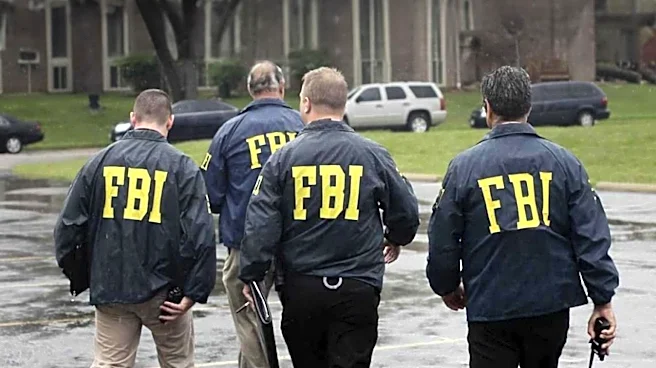

The history of women in the Federal Bureau of Investigation (FBI), initially known as the Bureau of Investigation, is marked by periods of inclusion and exclusion, reflecting broader societal attitudes
towards women in professional roles. The early 1920s saw a brief but significant moment when the Bureau actively recruited female special agents, a pioneering move for federal law enforcement. However, this initial period was followed by a nearly five-decade hiatus, illustrating the complex and often challenging journey for women seeking to establish careers in traditionally male-dominated fields.
The Initial Experiment: Early Female Agents
In 1922, under the directorship of William J. Burns, the Bureau of Investigation made a notable decision to hire its first female special agent, Alaska P. Davidson. Davidson, then 54 years old, was appointed as a special investigator on October 11, 1922. Her recruitment, along with that of two other women, Jessie B. Duckstein and Lenore Houston, was driven by specific operational needs. The Bureau was particularly interested in employing female agents to work on cases related to the Mann Act, a federal law aimed at combating interstate sex trafficking. The nature of these investigations often required the unique perspective and approach that female agents could provide, especially when dealing with victims or undercover work in certain environments.
Despite this progressive step, the roles of these early female agents were not without limitations. Alaska P. Davidson, for instance, was described as "very refined," and consequently, she was explicitly instructed not to be assigned to "rough" duties. This restriction, coupled with her limited formal education, somewhat hampered her utility in prosecuting certain crimes, including those under the Mann Act, which could involve more demanding investigative tasks. This highlights a tension between the Bureau's need for female agents and the prevailing societal expectations and stereotypes regarding women's capabilities and appropriate roles.
The Long Hiatus: 1929 to 1972
The brief era of female special agents came to an end relatively quickly. In 1924, J. Edgar Hoover assumed the directorship of the Bureau of Investigation. His leadership brought about significant changes, and the role of female agents was soon re-evaluated. The Special Agent in Charge of the Washington office, where Davidson was stationed, reported that he had "no particular work for a woman agent." This assessment led to Hoover requesting Davidson's resignation, which she submitted on June 10, 1924.
Jessie B. Duckstein also resigned in 1924, and Lenore Houston followed in 1928. With Houston's departure, the Bureau of Investigation, which would later become the FBI, entered a prolonged period without any female special agents. For an astonishing 43 years, from 1929 until 1972, the FBI did not employ women in this capacity. This extended absence underscores a significant shift in policy and a return to a more traditional, male-exclusive view of federal law enforcement. The reintroduction of female special agents in 1972 marked another turning point, signaling a renewed recognition of women's capabilities and a gradual move towards greater diversity within the Bureau, a legacy that began with pioneers like Alaska P. Davidson.