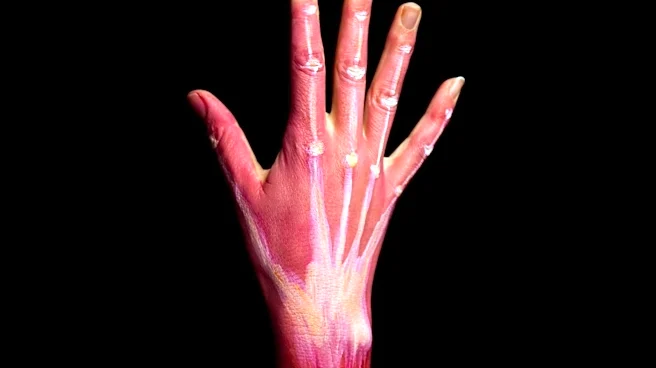









The abductor digiti minimi, often abbreviated as ADM, is a crucial skeletal muscle located along the ulnar border of the palm of the hand. This muscle plays a significant role in the dexterity and strength of the hand, particularly in movements involving the little finger. Its distinctive spindle-like shape contributes to the hypothenar eminence, a fleshy mound on the palm, which is also composed of skin, connective tissue, and fat. Understanding
the abductor digiti minimi provides insight into the intricate mechanics that allow for complex hand movements, from delicate gestures to powerful grips.
Anatomical Origins and Insertions
The abductor digiti minimi muscle has specific points of origin and insertion that dictate its function. It originates from three distinct structures: the pisiform bone, the pisohamate ligament, and the flexor retinaculum. These origins provide a stable base from which the muscle can exert force. As the muscle extends distally, its tendon divides into three slips. These slips insert into various points around the little finger's base, specifically the ulnopalmar margin of the proximal phalanx, the palmar plate of the metacarpophalangeal joint, and, if present, a sesamoid bone.Further adding to its complex structure, some fibers of the abductor digiti minimi insert into the finger's dorsal aponeurosis. This connection is notable because it allows the muscle to act in a manner similar to a dorsal interosseus muscle, contributing to the intricate balance of forces within the hand. Additionally, the ulnar-most portion of the tendon integrates with the little finger's digital cord. This integration means the muscle is part of a larger system that not only flexes the metacarpophalangeal joint but also extends the interphalangeal joints, showcasing its multifaceted role in finger movement.
Primary Functions and Neurological Control
The main function of the abductor digiti minimi is to abduct the little finger, meaning it pulls the little finger away from the other fingers. This action occurs at the metacarpophalangeal joint, which is the joint connecting the finger to the palm. This seemingly simple movement is vital for many everyday tasks, especially those requiring a wide grip or precise finger positioning. For instance, when grasping large objects, the ability to splay the fingers, including the little finger, is significantly aided by the abductor digiti minimi.Beyond abduction, the muscle also contributes to the extension of the middle phalanx of the little finger. This secondary function is achieved through its connection to the finger's extensor mechanism, highlighting the interconnectedness of the hand's muscular and tendinous systems. The muscle's activity is controlled by the nervous system, specifically innervated by the deep branch of the ulnar nerve. This nerve originates from spinal cord segments C8 to T1, underscoring the neural pathways that enable voluntary control over this important hand muscle.
Variability and Developmental Insights
The abductor digiti minimi is recognized as the most variable muscle within the hypothenar group. This variability can manifest in several ways, including the presence of accessory slips. These additional slips might originate from various surrounding structures, such as the tendon of the flexor carpi ulnaris, the flexor retinaculum, the fascia of the distal forearm, or even the tendon of the palmaris longus. In rare instances, accessory fascicles have been observed arising from the antebrachial fascia, the radius, and the ulna, further illustrating its anatomical diversity.From a developmental perspective, the abductor digiti minimi forms relatively early. It originates from an ulnar muscle primordium within the superficial layer of the hand's original undifferentiated mesenchyme. This early development occurs alongside the medial primordia of the flexor digitorum superficialis and the radial abductor pollicis brevis. This contrasts with the other hypothenar muscles, which typically develop later from the deep layer, suggesting a distinct developmental pathway for the abductor digiti minimi.