


The 1943 Frankford Junction train wreck was a tragic event that involved one of the Pennsylvania Railroad's most esteemed services, the Congressional Limited. On September 6, 1943, this premier train, designated as Train #152, embarked on a journey that would end in disaster at Frankford Junction in Philadelphia, Pennsylvania. The incident, caused by a mechanical failure, resulted in 79 fatalities and 117 injuries, marking a dark day in American rail
history during a period of national wartime focus. Understanding the train itself, its composition, and its final moments provides crucial context to the scale of the tragedy.
The Pride of the Pennsylvania Railroad
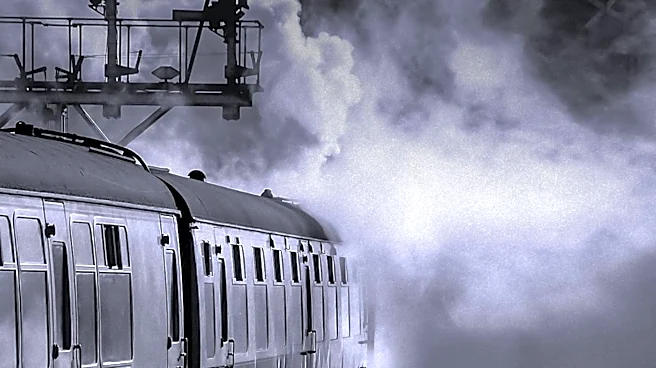
The Congressional Limited was a flagship passenger train operated by the Pennsylvania Railroad, known for its quality service and importance on the Northeast Corridor. On that fateful day, Train #152 was carrying 541 passengers, a significant number reflecting its popularity and the wartime travel demands. The train's consist, or the specific arrangement of its cars, was extensive and included a variety of passenger accommodations designed for comfort and service. It was led by PRR 4930, a powerful GG1 class electric locomotive, which was at the forefront of the train's journey.
Following the locomotive were numerous passenger cars, each serving a specific function. The train included a series of coaches, specifically PRR 4706, PRR 3854, PRR 3940, PRR 3751, PRR 3971, PRR 3861, PRR 1860, and PRR 3941. These coaches provided standard seating for the majority of passengers. Beyond the coaches, the Congressional Limited offered dining and lounge services, indicative of its premier status. This included PRR 8023, a lunch-counter-kitchen car, and PRR 8024, a dedicated dining room car, allowing passengers to enjoy meals during their journey.
A Detailed Consist and the Final Moments
Further enhancing the luxury and comfort of the Congressional Limited were several Pullman parlor cars, named Quaker Valley, Susan B. Anthony, Bay Head, and Richard Henry Lee. These cars offered more exclusive and comfortable seating arrangements for passengers. The train also featured a Pullman sleeping car named Willow River, providing overnight accommodations, and an Alexander Hamilton parlor-lounge car, offering a space for relaxation and socializing. This diverse consist highlights the comprehensive service the Congressional Limited aimed to provide its passengers.
As the train proceeded on its route, it passed through North Philadelphia station, reportedly ahead of schedule and with all systems appearing to be in order. However, this smooth progress was soon to be interrupted. Shortly after passing the station, as it moved by a rail yard, workers noticed flames emanating from a journal box on one of the cars. This "hot box" indicated a severe mechanical issue. Despite immediate attempts to alert the next signal tower at Frankford Junction, the warning came too late. The train, traveling at 56 miles per hour, reached the signal tower at 6:06 p.m. when the journal box on the front of car No. 7 seized, causing an axle to snap. This critical failure led to the car being catapulted upwards, striking a signal gantry, and initiating the catastrophic derailment that scattered six cars and claimed many lives.