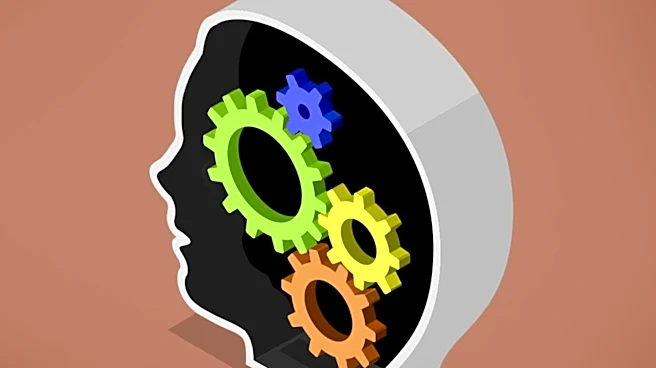











The false dilemma, an informal fallacy that artificially limits available options, isn't just a logical error; it's often rooted in fundamental aspects of human psychology. Understanding why people tend to commit or fall for this fallacy requires looking beyond pure logic into empirical psychology. A significant factor is the inherent human tendency to simplify complex realities, often by framing them in "either-or" terms. This cognitive shortcut,
while sometimes practical, can lead to a distorted view of choices and outcomes.
The Innate Drive for Simplification
One of the primary psychological reasons for the prevalence of false dilemmas is the human brain's inclination to simplify reality. Our minds often try to organize information and make sense of the world through clear, binary distinctions. This tendency is, to some extent, built into human language itself, which is replete with pairs of opposites. We frequently encounter concepts presented as dichotomies, such as "good or bad," "right or wrong," or "black or white." While these linguistic structures can aid in communication and initial understanding, they can also inadvertently reinforce the idea that choices are always limited to two extremes.This drive for simplification can be particularly strong when individuals face situations requiring quick decisions or when they lack sufficient time to gather more detailed information. In such scenarios, reducing complex problems to a limited set of options can feel efficient, even if it means overlooking crucial alternatives. However, this efficiency comes at the cost of accuracy, as it can prevent a thorough exploration of all possibilities and lead to suboptimal or flawed conclusions. The comfort of a clear-cut choice, even a false one, can be more appealing than grappling with ambiguity and a multitude of options.
Black-and-White Thinking and its Impact
A phenomenon closely related to the false dilemma in psychology is "black-and-white thinking," also known as "thinking in black and white" or "splitting." This cognitive pattern involves categorizing people, situations, or ideas into absolute, extreme categories, such as "all good" or "all bad," without acknowledging any middle ground or nuance. Individuals who routinely engage in black-and-white thinking are particularly susceptible to false dilemmas because their mental framework already predisposes them to see limited options.This type of thinking ignores the continuous spectrum that often exists between extremes. For example, someone engaging in black-and-white thinking might categorize others as either entirely trustworthy or completely untrustworthy, failing to recognize the varying degrees of reliability that exist in human relationships. When presented with a false dilemma, such as "you are either with us or against us," a person prone to black-and-white thinking is more likely to accept these limited options without questioning the existence of other stances or perspectives. Overcoming this psychological predisposition requires conscious effort to recognize and challenge these ingrained patterns of thought, fostering a more nuanced and comprehensive understanding of choices.
Overcoming Cognitive Biases to Avoid False Dilemmas
Avoiding false dilemmas necessitates a conscious effort to counteract these natural psychological tendencies. Critical thinking plays a vital role in this process, encouraging individuals to actively seek out and consider alternatives that may not be immediately apparent. Creativity is also essential, as it helps in envisioning new possibilities and solutions that lie outside the prearranged, limited options presented by a false dilemma. By deliberately questioning the completeness of the choices offered, one can break free from the confines of a false dichotomy.Philosophical discussions also touch upon the human insistence on clear distinctions, sometimes denying the inherent vagueness of many common expressions. This desire for precision can inadvertently contribute to false dichotomies by forcing concepts into rigid categories where a spectrum or overlap might exist. Recognizing that many phenomena are indeterminate and that distinctions can still be valid even if they allow for marginal or diverging cases is crucial. Ultimately, overcoming the psychological pull of false dilemmas involves embracing complexity, challenging simplistic narratives, and actively exploring the full landscape of available choices.