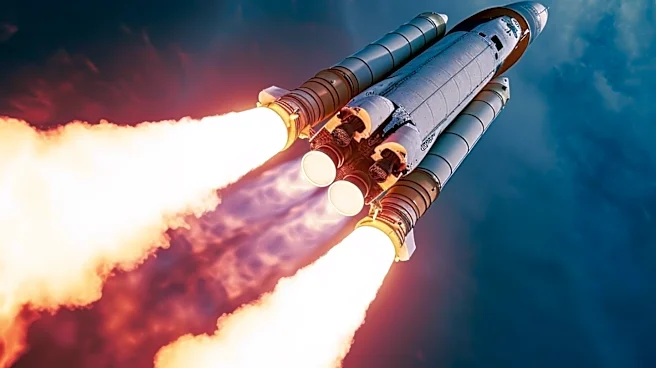






The STS-65 mission, launched aboard the Space Shuttle Columbia on July 8, 1994, was a significant milestone in the realm of microgravity research. This mission carried the International Microgravity Laboratory (IML-2), which was pivotal in advancing scientific understanding in a microgravity environment. With a crew of seven, including international scientists, STS-65 aimed to broaden the scope of investigations and contribute valuable data to the research base
for the space station.
The International Microgravity Laboratory (IML-2)
The IML-2 was the second in a series of Spacelab flights designed to conduct research in a microgravity environment. This concept allowed scientists to apply results from one mission to the next, thereby expanding the variety of investigations. The collaboration involved scientists from NASA, the European Space Agency (ESA), Canada, France, Germany, and Japan, providing a diverse range of complementary facilities and experiments. These were mounted in twenty racks within the IML-2 module, showcasing the international effort to advance microgravity science.
Research conducted on IML-2 covered a broad range of activities, from understanding the fundamental physics involved in material behavior to generating materials that cannot be produced on Earth due to gravitational constraints. The mission's microgravity science experiments drew heavily on spacecraft power, while life sciences experiments demanded significant crew time. This balance was crucial in maximizing the scientific output of the mission.
Life Sciences Experiments
Life sciences research on IML-2 focused on studying the characteristics of cells and organisms in isolation, thanks to the reduced gravitational effects. This environment also posed occupational health challenges for space crews, ranging from space adaptation syndrome to long-term hormonal changes. The mission included various life sciences experiments, such as the Aquatic Animal Experiment Unit, Biorack, Biostack, and the Extended Duration Orbiter Medical Program.
These experiments aimed to understand the impact of microgravity on biological systems, providing insights into how space travel affects human health. The data collected contributed to developing strategies for maintaining astronaut health during long-duration missions, a critical aspect of future space exploration.
Microgravity Science Experiments
The microgravity science experiments on STS-65 were diverse and innovative. They included the Applied Research on Separation Methods, Bubble, Drop and Particle Unit, and the Critical Point Facility, among others. These experiments explored the behavior of materials and processes in a microgravity environment, offering insights that could lead to new technologies and materials.
The mission also featured other payloads, such as the Advanced Protein Crystallization Facility and the Commercial Protein Crystal Growth experiment. These aimed to understand protein crystallization in space, which has implications for drug development and other scientific fields. The STS-65 mission was a testament to the collaborative efforts of international scientists and the potential of microgravity research to drive scientific advancements.