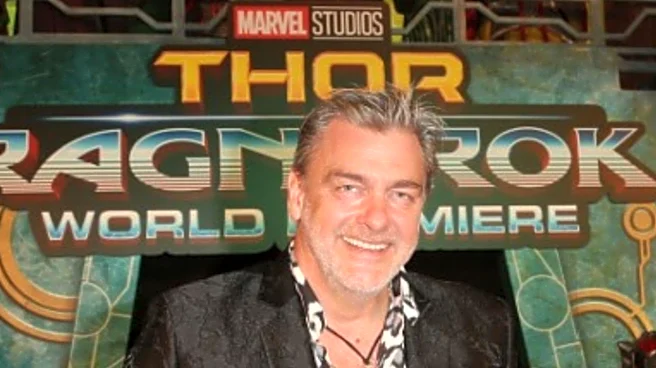






"Thor: Ragnarok," released in 2017, stands as a significant entry in the Marvel Cinematic Universe (MCU), marking the 17th film in the expansive franchise. Produced by Marvel Studios and distributed by Walt Disney Studios Motion Pictures, it served as a sequel to both 2011's "Thor" and 2013's "Thor: The Dark World." The film premiered at the El Capitan Theatre in Hollywood, Los Angeles, on October 10, 2017, before its wider release in the United States
on November 3, as part of Phase Three of the MCU. Its journey from confirmation in 2014 to its theatrical debut was met with considerable acclaim and financial success.
Development and Production Milestones
The confirmation of a third Thor film came in January 2014, with Craig Kyle and Christopher Yost beginning work on the screenplay. The involvement of Chris Hemsworth as Thor and Tom Hiddleston as Loki was announced in October of that year, coinciding with the revelation of the film's title, "Thor: Ragnarok." A year later, Taika Waititi joined the project as director, stepping in after Alan Taylor, who directed "Thor: The Dark World," opted not to return. Waititi's direction would later be a key factor in the film's positive reception.
Further casting announcements solidified the ensemble, with Mark Ruffalo joining to reprise his role as Bruce Banner/Hulk. This inclusion allowed for the adaptation of elements from the 2006 comic storyline "Planet Hulk" into the film's narrative. By May 2016, the rest of the cast was confirmed, including Cate Blanchett as Hela. Eric Pearson's involvement in the screenplay was revealed at the start of principal photography in July 2016. Filming primarily took place in Brisbane and Sydney, Australia, with exclusive use of Village Roadshow Studios in Oxenford, concluding in October 2016.
Critical Acclaim and Box Office Triumph
Upon its release, "Thor: Ragnarok" garnered widespread praise from critics. Reviewers particularly highlighted the acting performances, Taika Waititi's distinctive direction, the dynamic action sequences, impressive visual effects, the musical score, and its humor. Many critics went so far as to consider it the best installment in the entire Thor franchise, a testament to its fresh approach and engaging storytelling.
This critical success was mirrored by its performance at the box office. "Thor: Ragnarok" grossed an impressive $855 million worldwide, making it the highest-grossing film in the Thor series. Furthermore, it secured its place as the ninth-highest-grossing film of 2017, demonstrating its significant commercial appeal. The film's success paved the way for a sequel, "Thor: Love and Thunder," which was released in July 2022, continuing the narrative trajectory established by "Ragnarok."
Narrative Impact and Character Evolution
The film's narrative saw Thor imprisoned by the fire demon Surtur, who revealed the impending apocalypse known as Ragnarök. Thor's journey involved escaping the alien planet Sakaar, where he was sold as a gladiator to the Grandmaster and forced to fight his friend, the Hulk. This storyline allowed for significant character development, particularly for Thor, who ultimately embraced his true power without relying solely on his hammer, Mjolnir. The film also introduced new key characters like Valkyrie, a legendary female warrior, and further explored the complex relationship between Thor and his estranged brother, Loki. The blend of humor, action, and character depth contributed significantly to its critical and commercial triumph, solidifying its status as a fan favorite within the MCU.