







Ichthyosis vulgaris, also known as "autosomal dominant ichthyosis" or "Ichthyosis simplex," stands out as the most common and generally one of the mildest forms within the broader family of ichthyosis disorders. This skin condition, characterized by dry, scaly skin, affects approximately 1 in 250 people, earning it the designation of "common ichthyosis." It is typically an autosomal dominant inherited disease, frequently associated with the filaggrin
protein. However, a rare, non-heritable variant known as acquired ichthyosis also exists, presenting a similar clinical and histological picture to its inherited counterpart.
Ichthyosis vulgaris is a prominent member of the ichthyoses, a diverse group of inherited skin disorders defined by abnormalities in how the skin produces keratin. While all these conditions share the common feature of generalized skin scaling, the intensity of this scaling can vary significantly. Compared to other forms of ichthyosis, ichthyosis vulgaris is generally perceived as the least severe, contributing to its higher prevalence and often milder impact on individuals.
Presentation and Symptom Development
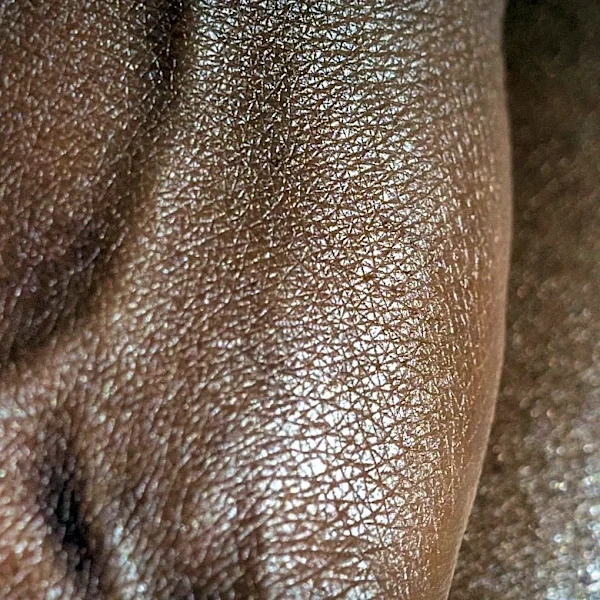
The symptoms of the inherited form of ichthyosis vulgaris are not usually present at birth. Instead, they typically develop between three months and five years of age. As individuals grow older, the symptoms often show improvement, though they may re-emerge or become more severe in old age. During infancy, when ichthyosis vulgaris typically manifests, common signs include skin dryness (xerosis), skin lesions, and keratosis pilaris, which are small skin bumps. Other indicators can be thickened skin on the palms and soles, known as palmoplantar hyperlinearity, and generalized scaly skin (scaly dermatosis). In rare, severe cases, red and inflamed skin, or erythroderma, may also become apparent, usually by the age of five.
For most individuals with ichthyosis vulgaris, the condition is not life-threatening, and they can expect a regular lifespan. However, potential complications can arise, such as vitamin D deficiency and hearing problems, which may be caused by scaling in the ears. Beyond the physical symptoms, the visible changes in the skin can significantly diminish a person's quality of life, highlighting the psychosocial impact of the disorder. In mild cases, the primary concerns are often limited to mild itching and the social implications of having skin with an unusual appearance.
Genetic Underpinnings and Associated Conditions
Ichthyosis vulgaris is understood to be a common genetic disorder caused by a single gene. The disorder is thought to result from changes in the gene responsible for producing a protein called profilaggrin, which subsequently converts into filaggrin. Filaggrin plays a crucial role in the structural integrity and barrier function of our skin. Approximately 10% of people carry some gene changes in the profilaggrin gene, and these changes can also be linked to atopic dermatitis, another skin problem that frequently co-occurs with ichthyosis vulgaris. While the specific gene changes responsible for ichthyosis vulgaris are identified in some cases, the full genetic picture is not yet completely understood.
Acquired ichthyosis, a non-heritable form, can develop in adulthood and may signal an underlying systemic disease. It has been observed in association with various conditions, including malignancies, such as Hodgkin's disease, mycosis fungoides, other malignant sarcomas, Kaposi's sarcoma, and visceral carcinomas. It can also occur in individuals with leprosy, AIDS, tuberculosis, and typhoid fever, as well as in cases involving certain drugs, endocrine and metabolic diseases, and autoimmune conditions. This highlights that while ichthyosis is primarily a genetic disorder, its symptoms can sometimes manifest as a secondary effect of other health issues.