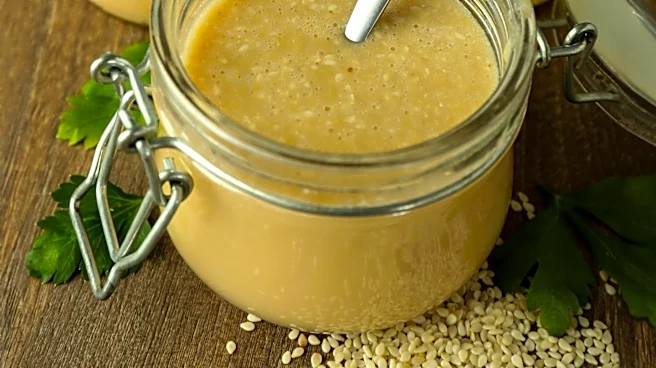








Tahini, a Middle Eastern condiment made from ground sesame seeds, is a staple in many cuisines across West Asia, the Eastern Mediterranean, the South Caucasus, and parts of North Africa. This seed butter is incredibly versatile, serving as a dip on its own, an ingredient in salad dressings, or a key component in popular dishes like hummus, baba ghanoush, and halva. While the most common variety is made from hulled sesame seeds, unhulled seeds can
also be used, offering a slightly more bitter taste but increased nutritional benefits. The seeds are typically roasted before grinding, contributing to tahini's distinctive flavor and aroma.
Nutritional Profile and Preparation
Beyond its culinary applications, tahini boasts a robust nutritional profile. In a 100-gram serving, it provides 592 calories and is rich in essential nutrients. It is an excellent source of thiamine, offering 133% of the Daily Value (DV), and also supplies significant amounts of several dietary minerals, ranging from 25-63% DV. Niacin and folate are also present in moderate to high amounts, contributing 25-35% DV. Additionally, tahini is a moderate source of calcium and potassium, providing 10-19% DV of each. Its macronutrient breakdown includes 53% fat, 22% carbohydrates, 17% protein, and 3% water, making it a calorie-dense and nutrient-rich food.
The preparation of tahini involves grinding sesame seeds, a process that has historical roots. The word "tahini" itself is of Arabic origin, derived from the Levantine Arabic pronunciation of "ṭaḥīna" or "ṭaḥīniyya." This term is linked to the Classical Arabic root "Ṭ-Ḥ-N," where the verb "ṭaḥana" means "to grind." This root also gives rise to the word "ṭaḥīn," meaning "flour" in some dialects. The English word "tahini" appeared in the late 1930s, though earlier English sources referred to it as "sesame butter" or "sesame seed butter."
Regional Culinary Significance
Tahini holds particular cultural and culinary importance in various regions. In Israel, it is considered a staple food. It is commonly served as a dip alongside flatbread or pita and used as a topping for popular dishes such as falafel, sabich, Jerusalem mixed grill, and shawarma. It also serves as a key ingredient in various spreads and sauces for meat and fish. Its use extends to sweet desserts, including halva, halva ice cream, and tahini cookies. Furthermore, tahini is baked with kufta made of lamb or beef, seasoned with spices and herbs, or with whole fish in coastal areas and around the Sea of Galilee.
In the Levant, tahini is also a prominent ingredient, particularly in sweet baked goods. For instance, a sweet bun filled with tahini, sugar, and cinnamon is a popular treat. This demonstrates tahini's adaptability, moving seamlessly between savory and sweet applications and highlighting its integral role in the diverse culinary traditions of the Middle East and surrounding regions. Its rich flavor and nutritional value make it a cherished ingredient that continues to be enjoyed in many forms.