




Supermoto racing demands a unique breed of motorcycle, one capable of seamlessly transitioning between the high-grip tarmac of road racing and the loose, obstacle-laden terrain of off-road tracks. This necessity has led to the development of highly specialized machines, often referred to as 'supermotard' bikes, which are custom-engineered to excel in this hybrid environment. The design philosophy behind these motorcycles focuses on adaptability, robust
construction, and performance enhancements tailored to the sport's distinct challenges.
The 'Supermotard' Design Philosophy and Key Modifications
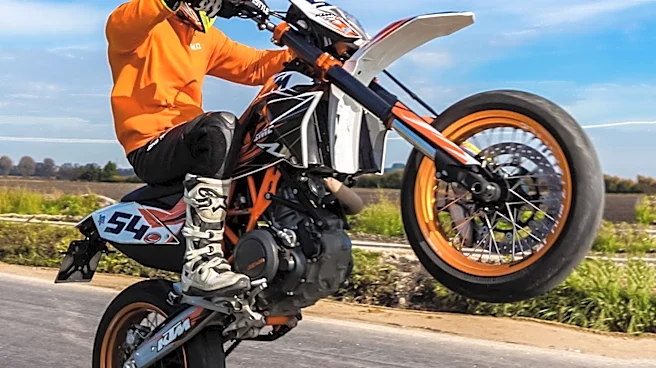
At its core, a Supermoto motorcycle is typically a custom-created combination of an off-road dirt bike chassis integrated with road-racing wheels and tires. This fundamental blend allows for the agility and suspension travel needed for dirt sections, coupled with the grip and handling characteristics required for paved surfaces. To further optimize performance for this dual-surface racing, several key modifications are essential. One critical area of enhancement is the braking system; braking power is significantly improved through the installation of oversize front brake rotors and calipers, providing the stopping force necessary for aggressive cornering on asphalt.
Another common, yet crucial, addition to Supermoto bikes is the inclusion of hand guards. While Supermoto courses generally lack the trees found in traditional off-road environments, hand guards are frequently added due to the extreme cornering angles achieved by riders. These guards serve a vital protective role, greatly improving the survivability of the brake and clutch levers during a fall. This enhanced crash resistance is a significant advantage in Supermoto, often allowing bikes to quickly re-enter the fray during a race following an incident, minimizing downtime and maintaining competitive momentum.
Manufacturers' Pioneering Contributions and Specialized Models
Manufacturers have played a pivotal role in the evolution and popularization of Supermoto, with some leading the way in developing purpose-built machines. KTM, for instance, holds the distinction of being the first manufacturer to offer a competition-ready supermoto bike directly to the public. This pioneering effort helped establish a benchmark for specialized Supermoto motorcycles. KTM's earlier supermoto models included the 625 SMC and the race version 560 SMR, which were designed to meet the rigorous demands of the sport.
Although KTM stopped dedicated supermoto production in 2016 to concentrate on its stock 690 SMC R machines, the brand continues to offer highly capable models. For the 2019 model year, the 690 SMC R underwent a complete renewal, incorporating the latest version of the single-cylinder LC4 power unit, which was initially introduced for the 2016 Duke model. This updated 690 SMC R is a lightweight machine, weighing 141 kg, and is powered by a 48 kW liquid-cooled one-cylinder four-stroke motor (LC4), featuring a hydraulically actuated APTC slipper clutch for enhanced performance and control.
Husqvarna's Championship Success and Production Offerings
Husqvarna Motorcycles has also made significant contributions to the Supermoto landscape, both through its competitive successes and its production of specialized models. The brand has achieved multiple World Supermoto Championships, demonstrating the effectiveness of its engineering and racing programs. Notable victories include Gérald Delepine winning the SM1 World Supermoto Championship in 2005 and the SM2 World Supermoto Championship in 2007. Adrien Chareyre also contributed to Husqvarna's legacy, securing the SM1 World Supermoto Championship in 2007 and consecutive SM2 World Supermoto Championships in 2008 and 2009.
Beyond racing, Husqvarna offers Supermoto models to the public, catering to enthusiasts and competitors alike. Examples include the FS 450, a four-stroke supermoto with a 450cc engine displacement, and the 701 Supermoto, a four-stroke model with a 701cc engine. It's worth noting that Husqvarna's model naming conventions, such as the '701' designation, often refer to approximate values rather than direct engine displacement; for instance, the 701 designates a 690cc engine, which is derived from the KTM 690 series of enduro, supermoto, and street bikes. Other manufacturers, such as Honda and Suzuki, also began introducing supermoto models to the European market in 2005, and the Italian factory TM Racing produced a supermoto MX450F with an aluminum frame and racing character, further diversifying the market for these specialized machines.