








Azerbaijan, often known as the "Land of Fire," is a nation where ancient traditions blend with modern influences, creating a unique cultural landscape. Its position at the crossroads of Eastern Europe and Western Asia has fostered a society rich in customs, languages, and social etiquette. The majority of the population, over 92%, are Azeris, who share a culture very similar to Turkey. However, nearly two centuries of Russian and Soviet rule have
introduced distinct characteristics, particularly in attitudes towards religion and social interactions. Understanding these nuances is key to appreciating the depth of Azerbaijani culture.
Language and Ethnic Identity
The official language of Azerbaijan is Azeri, also known as Azerbaijani, spoken by 90-95% of the population. This Turkic language shares a high degree of mutual intelligibility with Turkish, meaning Turkish speakers generally find it easy to navigate the country. Beyond Azeri, Russian holds significant importance and is widely considered the lingua franca of the nation, a legacy of the Soviet era. While English is not as widely spoken, its popularity is growing, especially in Baku, where visitors are more likely to find English speakers.
The Azeri people form the largest ethnic group, but there is also a significant Azeri population in Iran, which is Iran's largest ethnic minority. Over time, the influence of Russian and Persian cultures has led to some differences between Azeris in independent Azerbaijan and those in Iran. This cultural divergence highlights the impact of historical political boundaries on ethnic identity and cultural evolution. The presence of diverse linguistic influences, particularly Russian, has shaped communication patterns and cultural exchange within Azerbaijan.
Social Etiquette and Respectful Interactions
Azerbaijanis are generally described as reserved yet polite and well-mannered people. When invited into an Azerbaijani home, it is customary to bring a gift. While flowers are acceptable, it's important to bring an odd number, as an even number is associated with funerals. Chocolate is also a suitable gift, but alcoholic beverages like wine are typically avoided. The thought behind the gift is valued more than its price. Upon entering a home, guests should remove their shoes just outside or immediately inside the door, unless explicitly told otherwise, and may be offered slippers.
Respect for elders is a deeply ingrained value. In public transportation, younger individuals will always offer their seats to older people, as well as to those with disabilities or pregnant women. It is also considered polite for women to be the first to board and leave public transport or to enter and exit a room. When greeting someone older or in a position of authority, a slight bend (not a full bow) is respectful, and younger people are expected to initiate greetings. For those not well-acquainted, using a first name followed by an honorific like "Xanım" (Mrs.) for women or "Cənab" (Mr.) for men is appropriate. Women are traditionally treated with chivalry, and male travelers should be aware that gestures like opening doors or paying bills may be expected by Azeri women.
Religious Attitudes and Public Behavior
Despite approximately 95% of the population being nominally Shiite Muslim, Azerbaijan is a strictly secular state, and its society is largely agnostic and non-religious. This secularism is evident in both urban and rural areas. Alcoholic beverages are commonly consumed by Azeri men, a practice widely accepted and attributed to the Russian and Soviet legacy. However, drinking is rare among women and seldom occurs in mixed-gender settings in rural areas or socially conservative families.
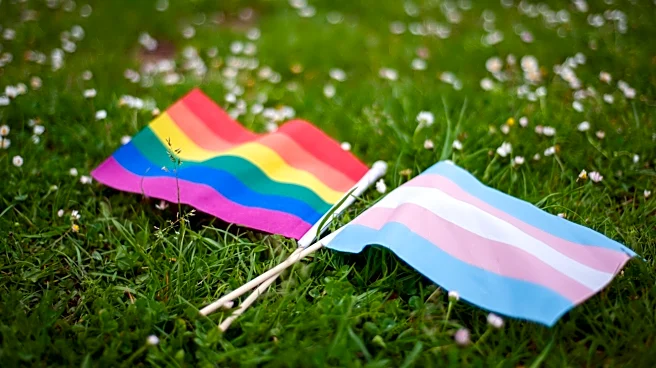
Due to regional unrest, the government maintains strict control over religious clothing and symbols, promoting greater secularization. Public displays of religious signs, flags, slogans, or proselytizing are prohibited by law, with violations leading to fines, imprisonment, or deportation for foreigners. It is generally unwelcome to inquire about people's faith, and public displays of personal faith should be kept private. While religious attire like headscarves or T-shirts with religious slogans are tolerated, they might make some Azerbaijanis uncomfortable. Similarly, long beards may draw suspicion from authorities. Public displays of affection are tolerated in larger cities but frowned upon in rural areas, and LGBT travelers are advised to avoid outward signs of affection due to strong societal stigma.