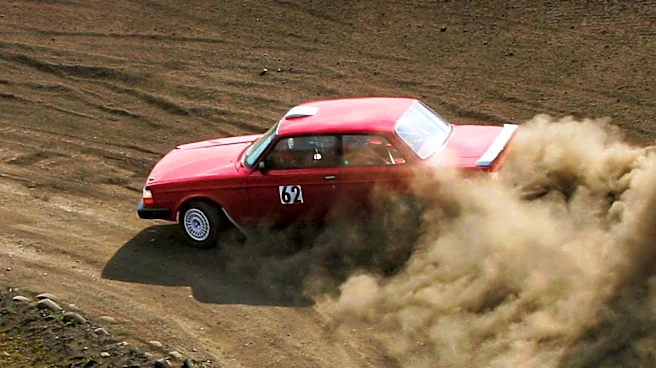






The Rally de Portugal holds a unique and enduring legacy in the world of motorsport, characterized by periods of immense triumph, significant challenges, and profound tragedies. Since its inception in 1967, this annual event has not only showcased Portugal's challenging terrains but has also played a crucial role in the evolution of international rallying. From its early days as a local competition to its status as a celebrated round of the World
Rally Championship, the rally has left an indelible mark, influencing safety regulations, attracting global talent, and consistently adapting to remain at the forefront of the sport. Its story is a testament to both the exhilarating highs and the sobering lows inherent in high-speed competition.
Early Triumphs and Global Recognition
The Rally de Portugal quickly established itself as a premier event, earning international acclaim within a few years of its debut. After starting as an internal competition for TAP employees, it gained significant traction with the involvement of key figures like Alfredo César Torres and engineer Vaz Guedes, leading to its international launch in 1967. The rally's rapid growth was evident, attracting 190 entries by 1968. Its inclusion in the European Rally Championship in 1970 and, more significantly, in the World Rally Championship in 1973, solidified its place on the global motorsport stage.The late 1970s and early 1980s marked a golden era for the Rally de Portugal. During this period, it consistently received the prestigious title of "Best Rally in the World" from the BPICA (Bureau Permanent International des Constructeurs d'Automobiles) for five consecutive editions from 1976 to 1980, and again in 1982. This recognition was a testament to its challenging routes, excellent organization, and the passionate support it garnered. The rally became a must-attend event for top drivers and manufacturers, contributing significantly to its growing legacy as one of the sport's most respected competitions.
The Shadow of Tragedy and Safety Transformations
Despite its triumphs, the Rally de Portugal also faced profound tragedies that significantly impacted its trajectory and the sport as a whole. The most notable incident occurred in 1986 during the Group B era, a period known for its powerful cars and immense spectator enthusiasm. An accident involving Portuguese driver Joaquim Santos at Lagoa Azul resulted in multiple spectator fatalities and numerous injuries. This tragic event, coupled with other fatal accidents in rallying, served as a catalyst for major safety reforms. It led to the immediate cancellation of the Sintra round and the eventual banning of Group B cars by FISA at the end of 1986.The aftermath of the 1986 tragedy forced the rally to undergo significant changes. Popular stages near Lisbon were removed due to safety concerns, and the introduction of less powerful Group A cars altered the dynamic of the competition. Even with these changes, another spectator fatality occurred in 1987. These incidents underscored the inherent dangers of rallying and prompted continuous efforts to improve safety for both competitors and spectators. The legacy of these tragedies is a heightened awareness and ongoing commitment to safety measures that have reshaped the sport.
Resilience, Return, and Modern Legacy
After a period of absence from the World Rally Championship calendar following the 2001 edition, the Rally de Portugal demonstrated remarkable resilience and a strong desire to reclaim its place. Under new leadership at the Automóvel Club de Portugal, a concerted effort was made to bring the event back to the WRC. Following successful candidate events in 2005 and 2006, the rally officially rejoined the World Rally Championship in 2007. Since then, it has maintained a fixed position on the WRC calendar, with only a brief interlude in 2008 to host the Intercontinental Rally Challenge.The modern legacy of the Rally de Portugal is one of continuous adaptation and innovation. The 2017 edition, marking its 50th anniversary, saw significant changes in regulations, cars, and team alignments, leading to highly competitive outcomes. Even after the cancellation of the 2020 event due to the COVID-19 pandemic, the rally returned in 2021 with authorized public attendance. The 2022 edition further showcased its forward-thinking approach by featuring hybrid cars and green fuels, aligning with global sustainability efforts. This commitment to evolution ensures that the Rally de Portugal continues to be a vibrant and relevant event, contributing to the sport's history while embracing its future.