


Howard Hanson's Symphony No. 2, often called the "Romantic" Symphony, holds a special place in American music, not least because of a particular melodic passage known as the "Interlochen Theme." This lyrical and haunting melody, originally the second theme of the symphony's first movement, has transcended its orchestral origins to become a cultural touchstone. Its unique journey from a classical symphony to a beloved camp tradition and a memorable
film score highlights its profound and lasting impact on diverse audiences. The theme's ability to evoke strong emotions and its association with significant moments have cemented its place in musical history.
Origins in the "Romantic" Symphony
The "Interlochen Theme" first appears as the "lyrical, haunting second theme" within the opening movement of Hanson's Symphony No. 2. Composed in 1930, the symphony itself was a significant work, commissioned for the 50th anniversary of the Boston Symphony Orchestra. Hanson, a proponent of Neo-Romanticism, infused the symphony with rich harmonic textures and expressive melodies, characteristic of his style. The theme's initial presentation within the symphony is impactful, but its subsequent reappearances "with greater emphasis" in the second and third movements underscore its thematic importance to the entire composition. This structural integration ensures that the melody resonates throughout the work, preparing it for its later, broader recognition.
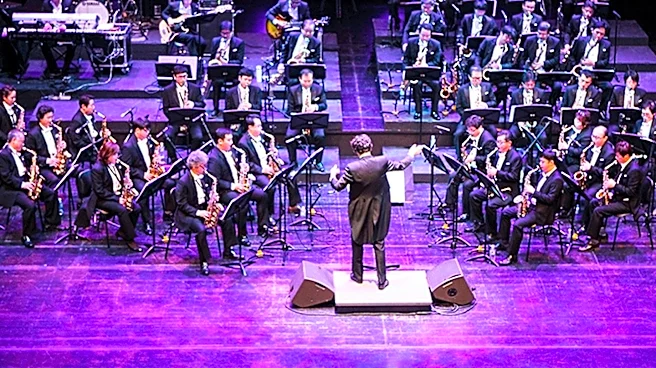
The symphony's instrumentation, featuring a standard orchestra including piccolo, flutes, oboes, English horn, clarinets, bassoons, contrabassoon, horns, trumpets, trombones, tuba, timpani, snare drum, bass drum, cymbals, harp, and strings, provides a full and vibrant canvas for the theme's expression. This rich orchestral palette contributes to the theme's emotional depth and its ability to captivate listeners, whether in a concert hall or in other contexts.
A Cherished Interlochen Tradition
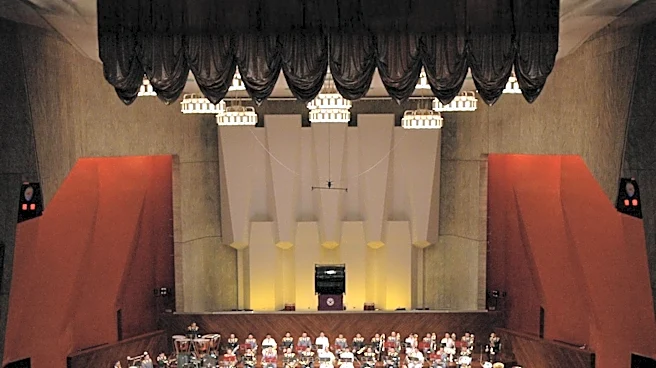
One of the most distinctive aspects of the "Interlochen Theme's" legacy is its deep connection to the Interlochen Arts Camp. At the conclusion of most public performances at the camp, this theme is played, marking a cherished tradition. Uniquely, it is customary for a student concertmaster to conduct the theme, and then, in a symbolic gesture signaling the end of camp, to break the baton. This ritual imbues the melody with a sense of community, accomplishment, and farewell, making it an integral part of the camp experience. The theme's performance at the camp is a moment of reflection and tradition, though it is important to note that it is seldom performed or mentioned at the Interlochen Arts Academy.
This tradition at Interlochen has fostered a unique relationship between the music and its audience, particularly among young musicians and artists who attend the camp. The theme becomes more than just a piece of music; it transforms into a symbol of shared experiences, artistic growth, and the passage of time. The absence of applause following its performance at Interlochen further emphasizes its ceremonial and reflective nature, distinguishing it from a typical concert piece.
From Concert Hall to Silver Screen
Beyond its role at Interlochen, the "Interlochen Theme" gained widespread recognition through its inclusion in popular culture. It is widely known for its use in the final scene and end credits of the iconic 1979 Ridley Scott film *Alien*. This unexpected placement introduced Hanson's melody to a vast, new audience, many of whom might not have otherwise encountered classical orchestral music. The theme's haunting quality proved to be a perfect fit for the film's atmospheric and suspenseful conclusion, demonstrating its versatility and emotional resonance across different artistic mediums.
This cinematic exposure significantly broadened the theme's reach, contributing to the Symphony No. 2 becoming Hanson's best-known work and one of the most-recorded 20th-century American symphonies. The theme's ability to evoke a sense of both beauty and unease made it memorable in the film context, further solidifying its place in the cultural consciousness. Its journey from a commissioned symphony to a camp tradition and a film score illustrates the powerful and multifaceted legacy of Howard Hanson's "Interlochen Theme."