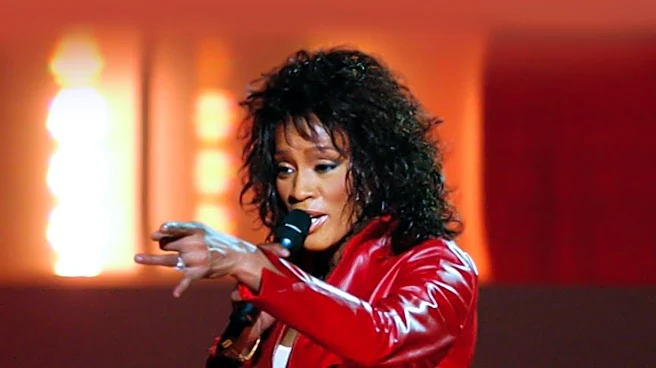



When Whitney Houston embarked on her theatrical film debut in "The Bodyguard," the accompanying soundtrack became a monumental success, not just for its record-breaking sales but also for the intricate creative process behind its creation. Released on November 17, 1992, by Arista Records, "The Bodyguard: Original Soundtrack Album" was more than just a collection of songs; it was a carefully curated musical extension of the film, heavily influenced
by Houston's artistic vision and the collaborative efforts of numerous producers and music executives. This album marked a significant point in Houston's career, showcasing her growing control over her musical output and her desire to explore different genres, including gospel.
From Reluctance to Creative Control
Initially, Whitney Houston was hesitant to take on the role in "The Bodyguard." It was co-producer and co-star Kevin Costner who ultimately convinced her. However, the film's initial script had very little music, a point of concern for Arista Records president Clive Davis. Davis, who had a background in film from his time on the boards of CBS and Columbia Pictures, argued that the film was not fully utilizing Houston's potential. He wrote to Costner and director Mick Jackson, emphasizing that the songs Houston could sing would directly tie into the need for a bodyguard and provide a foundation for chemistry between the characters. This intervention led to a deal where Houston secured rights to the soundtrack's back royalties and attained creative control, agreeing to record at least six tracks, five of which would be featured in the film. Both Houston and Davis were listed as executive producers on the album.
Houston began working on the soundtrack in mid-November 1991. This project marked a new phase in her career where she had the autonomy to select the producers she wanted to collaborate with. She reached out to previous collaborators like Babyface, Antonio "L.A." Reid, BeBe Winans, and Narada Michael Walden. It was also her first time working with renowned producer David Foster, who would produce three of her six tracks, and the production duo Clivillés and Cole. Houston herself co-produced two songs, further solidifying her creative input. According to BeBe Winans, Houston was "truly in control" during this period, having grown into her confidence and becoming more immune to external pressures. She was deeply involved in the decisions about which songs to sing, demonstrating a deeper understanding of the material beyond just vocal performance.
Crafting the Sound: Song Selection and Production
The process of selecting and producing the songs for "The Bodyguard" soundtrack was meticulous. Maureen Crowe was brought in as the film's music supervisor, working alongside Houston and Costner to find the perfect tracks. One of the first songs Houston tackled was the rock-infused "Queen of the Night." Initially an unfinished piece by Kenneth "Babyface" Edmonds and Daryl Simmons, Houston contributed lyrics and composition after visiting them in the studio. Longtime collaborator L.A. Reid also joined, suggesting a drum intro. David Foster's contributions began with "I Have Nothing," recorded on November 12, followed by "Run to You" three days later. These songs were handpicked by Arista A&R Gerry Griffith, who had discovered Houston a decade prior.
During the film's shooting, which commenced on November 25, Houston and Foster continued to refine the songs. Foster recalled working on vocals late into the night after filming, describing Houston as a "laser beam" in the studio, ready to perform without warm-up. Between January and February 1992, Houston returned to the studio to co-produce an R&B rendition of the gospel hymn "Jesus Loves Me" with BeBe Winans. Houston arranged the session and guided Winans on adding new lyrics and a bridge. Despite initial reluctance from Arista and Warner executives about including a gospel song, Houston insisted, fulfilling her desire to professionally record gospel music, and the song was ultimately included in both the film and the soundtrack.
The Centerpiece: "I Will Always Love You"
A significant challenge was finding a central song for the album and a "parting final song" for Houston's character. Kevin Costner initially pushed for Houston to record the Motown classic "What Becomes of the Brokenhearted," even suggesting an a cappella opening and a slower arrangement. However, neither Houston nor Crowe felt the song was suitable, with Houston reportedly telling Foster, "this song doesn't really fit me." The idea was dropped when it was discovered the song was already used in the film "Fried Green Tomatoes" and had become a chart hit for Paul Young.
It was Maureen Crowe who suggested Dolly Parton's country ballad "I Will Always Love You," after hearing Linda Ronstadt's rendition. Houston first performed it live in March 1992 during the final shooting of the film, singing the first verse a cappella to appease Costner. A studio recording followed on April 22, 1992. Before recording, Foster contacted Dolly Parton, who suggested Houston sing the third verse from her original recording, as Parton's original third verse had been a spoken recitation. Houston utilized her own band musicians, including drummer Ricky Lawson and saxophonist Kirk Whalum, for the song's production. The final Houston song recorded for the album was a rendition of Chaka Khan's "I'm Every Woman," with sessions taking place in August and October.