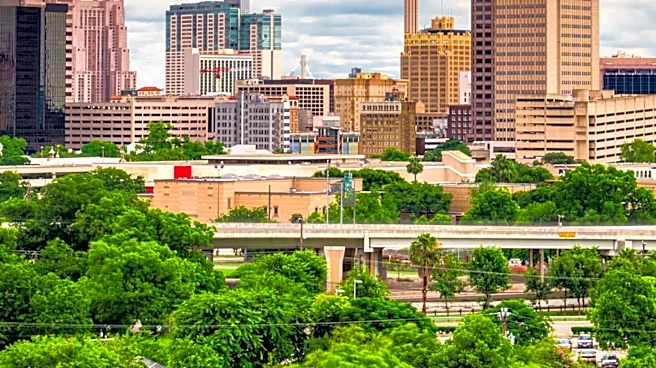

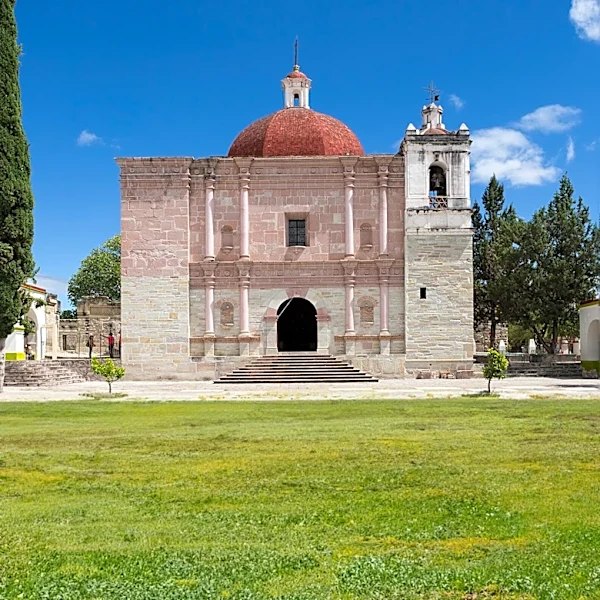

The Battle of Concepcion, fought on October 28, 1835, stands as a significant early engagement in the Texas Revolution. This 30-minute conflict, described by historian J. R. Edmondson as "the first major engagement of the Texas Revolution," took place on the grounds of Mission Concepcion, located two miles south of what is now Downtown San Antonio, Texas. It pitted Mexican troops under Colonel Domingo Ugartechea against Texian patriots led by James
Bowie and James Fannin. The Texian victory in this battle had immediate consequences for both sides and offered early insights into the nature of the conflict.
The Texian Scouting Mission and Strategic Positioning
The events leading up to the Battle of Concepcion began with a scouting mission. Colonel James Bowie led Texian forces, accompanied by James Fannin and ninety soldiers, divided into four companies. These companies were commanded by Captains Andrew Briscoe, Robert Coleman, Michael Goheen, and Valentine Bennet. Their route took them north, following the San Antonio River past Missions San Juan and San Jose. During this reconnaissance, they encountered a small group of Mexican scouts, who retreated to Bexar after a brief skirmish.
Approximately two miles from San Antonio de Bexar and six miles from the main Texian camp at Espada, the scouting party halted at Mission Concepcion. They identified a strategically advantageous position: the San Antonio River curved in a small horseshoe shape, with the two sides of the curve about 100 yards apart. According to historian Alwyn Barr, "trees shaded both sides of the broad river bottom which lay about six feet below the level of the rolling prairie nearby." Rather than immediately returning to Austin, as their orders dictated, Bowie and Fannin dispatched a courier to request Austin's presence at Concepcion. The following day, an angered Austin issued a statement, threatening officers who disobeyed orders with court-martial. The Texian scouting party then divided into two camps, with Fannin overseeing 49 men at the southern part of the horseshoe bend, and Bowie and the remaining men camping at the northern part. This arrangement was designed to catch any Mexican force approaching from the north in a crossfire. Pickets were strategically placed around the area and in the mission tower for enhanced visibility. As evening approached, the Texians were surprised when a Mexican cannonball, fired from one of Bexar's church towers, landed just beyond their camp. Many Texian soldiers suspected a priest from the mission had alerted the Mexican Army to their location.
The Mexican Assault and Texian Defense
In an attempt to neutralize the Texian force at Concepcion before the main Texian Army arrived, General Cos ordered Colonel Domingo Ugartechea to launch an early-morning assault on October 28. At 6:00 a.m., Ugartechea departed Bexar with 275 Mexican soldiers and two cannons. Heavy fog, however, delayed their advance, and the Mexican soldiers did not reach Concepcion until 8:00 a.m. A Mexican cavalry scout fired at Texian picket Henry Karnes, who returned fire before running back to his company, expressing frustration that "the scoundrels have shot off my powder horn." The Texians sought cover in a gully, firing from its edge before dropping six feet down to the river level to reload. As the remaining Texian sentries hurried to join the main body, Pen Jarvis was hit by a Mexican bullet and fell down the riverbank. Fortunately, the bullet struck a knife he had tucked into his belt, resulting only in bruises.
The Texian position was surrounded by trees, which severely hampered the Mexican cavalry's ability to maneuver. The 200 cavalry members remained on the west bank of the river, behind the Texians, to prevent any escape. Lieutenant Colonel Jose Maria Mendosa led the Mexican infantry and artillery across the river to a position below that of the Texians. In response, the Texians trimmed the undergrowth near their camp to improve visibility and dug steps into the embankment, making it easier to climb up to fire. The two sides engaged in desultory skirmishing for two hours until the fog began to dissipate. At this point, 50 to 60 Mexican infantrymen crossed the prairie, attempting to encircle the Texians. Observing their approach, Bowie instructed his forces, "Keep under cover, boys, and reserve your fire; we haven't a man to spare!" When the Mexican infantry reached 300 yards from the Texian position, they halted and formed a line with the cannon in the center. They began firing as they advanced, but their volleys largely passed over the heads of the Texians. Texian Noah Smithwick recounted that "grapeshot and canister thrashed through the pecan trees overhead, raining a shower of ripe nuts down on us, and I saw men picking them up and eating them with as little concern as if they were being shaken down by a norther." Bowie's official report to Austin noted that "The discharge from the enemy was one continued blaze of fire, whilst that from our lines, was more slowly delivered, but with good aim and deadly effect."
Texian Victory and Lasting Impact
As Mexican officers ordered a charge on the southern bend held by Fannin, Bowie dispatched Coleman's company as reinforcements. Most of these Texian reinforcements moved to their new position from below the river bank, but several rose from cover and dashed across the prairie. One of them, Richard Andrews, was struck in the side with grapeshot and died several hours after the battle, becoming the first Texian soldier to die in battle. As the reinforcements reached the southern part of the horseshoe, the Mexican infantry retreated, leaving their cannon within 100 yards of the Texians. The Texians then redirected their fire towards the cannoneers. After three different sets of gunners were killed or wounded, the cannons were abandoned. The Mexican infantry attempted three attacks, all of which were repulsed. When the Mexican buglers sounded a retreat, the infantry fell back beyond Texian rifle range. The Mexican cavalry was then sent to retrieve wounded men and the cannon. As the cavalry approached, Bowie led a charge onto the prairie. The Texians quickly captured the cannon and turned it on the fleeing Mexican soldiers. Grapeshot killed one of the mule drivers, causing his caisson to go out of control and "careen[...] through the shattered Mexican ranks." The entire battle lasted only 30 minutes.
The Texian victory at Concepcion was attributed by historian Alwyn Barr to "able leadership, a strong position, and greater firepower." The Mexican cavalry struggled to fight effectively in the wooded, riverbottom terrain, and the Mexican infantry's weapons had a significantly lower range compared to the Texians' long rifles. While Barr suggested the battle "should have taught ... lessons on Mexican courage and the value of a good defensive position," Stephen Hardin believed that "the relative ease of the victory at Concepcion instilled in the Texians a reliance on their long rifles and a contempt for their enemies." This confidence in their long rifles, however, may have inadvertently contributed to their later defeat at Coleto. The battle was the last offensive ordered by General Cos against the Texians, marking a significant turning point in the early stages of the Texas Revolution.