






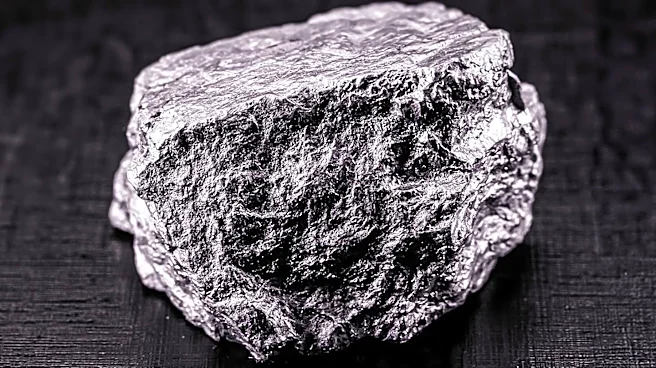
Ceres, the largest object in the asteroid belt, has a fascinating history of discovery and classification. Initially discovered in 1801 by Giuseppe Piazzi, Ceres was first announced as a new planet. Over time, its classification evolved, reflecting the changing understanding of celestial bodies in our solar system. This article delves into the historical journey of Ceres, highlighting key milestones in its classification.
Discovery of Ceres
On January 1, 1801, Giuseppe
Piazzi, an astronomer at the Palermo Astronomical Observatory in Sicily, discovered Ceres. This marked the first identification of an object within the asteroid belt, a region located between the orbits of Mars and Jupiter. Piazzi initially announced Ceres as a new planet, a significant addition to the known solar system at the time. The discovery was a milestone in astronomy, expanding the understanding of the solar system's composition.
Ceres was named after the Roman goddess of agriculture, reflecting the tradition of naming celestial bodies after mythological figures. The discovery of Ceres was a pivotal moment, as it opened the door to further exploration and identification of other objects within the asteroid belt.
Classification Changes
The classification of Ceres has undergone several changes since its discovery. Initially recognized as a planet, Ceres was later reclassified as an asteroid. This shift occurred as astronomers discovered more objects within the asteroid belt, leading to a reevaluation of what constitutes a planet. The term "asteroid" was introduced to describe these smaller celestial bodies.
In 2006, the International Astronomical Union (IAU) reclassified Ceres as a dwarf planet. This decision was part of a broader effort to categorize celestial bodies more accurately, following the discovery of similar objects beyond Neptune. Ceres became the only confirmed dwarf planet within the asteroid belt, highlighting its unique status among the numerous asteroids.
The Role of Space Missions
The understanding of Ceres has been significantly enhanced by space missions, particularly NASA's Dawn spacecraft. Launched in 2007, Dawn was tasked with exploring Ceres and Vesta, another large object in the asteroid belt. In 2015, Dawn became the first spacecraft to visit a dwarf planet, providing valuable data on Ceres's surface and composition.
The mission revealed that Ceres has a diameter about a quarter that of the Moon, and its surface features are barely visible even with powerful telescopes. Dawn's observations have contributed to a deeper understanding of Ceres, confirming its status as a dwarf planet and providing insights into its geological characteristics.