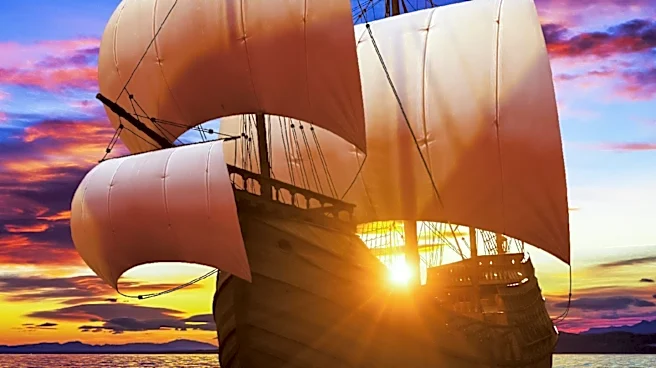






The CSS Shenandoah holds a distinctive place in the annals of the American Civil War, not only for its extensive commerce raiding but also for firing the last shot of the conflict and being the final Confederate entity to surrender. Its journey concluded six months after the war officially ended, a testament to the isolation and delayed communication of the era. The decision to surrender in Liverpool, United Kingdom, rather than a U.S. port, was a calculated
move by Captain James Iredell Waddell, driven by concerns over the fate of his crew and the legal ramifications of their actions.
The Last Shot and Delayed News
The Shenandoah's raiding mission extended well beyond the Confederacy's collapse. It is famously noted for having fired the last shot of the Civil War across the bow of a whaler in the waters off the Aleutian Islands. This event occurred long after major Confederate forces had surrendered, highlighting the vast distances and slow transmission of news during the mid-19th century. Captain Waddell and his crew, operating far from the main theaters of war, were largely unaware of the true extent of the Confederacy's defeat.
Despite President Jefferson Davis's proclamation and the inherent unreliability of newspapers at the time, Waddell and his crew understood that returning to a U.S. port would likely lead to severe consequences. News of Abraham Lincoln's assassination further diminished any hope for leniency. The crew anticipated that surrendering to federal authorities could result in trials in U.S. courts, potentially leading to charges of piracy and hanging. Commerce raiders were not included in the reconciliation and amnesty offered to Confederate soldiers, and Waddell would have been acutely aware that the U.S. government no longer faced the threat of Confederate retaliation against Union prisoners, thus removing a potential bargaining chip for his crew's fate.
The Surrender in Liverpool
Captain Waddell ultimately decided to surrender his ship in Liverpool, where Confederate Commander Bulloch was stationed. The Shenandoah sailed from the west coast of Mexico, via Cape Horn, to Liverpool, a journey of three months and over 9,000 nautical miles, all while being pursued by Union vessels. Upon reaching the Mersey Bar at the mouth of the estuary, awaiting a pilot to guide the ship into the docks, the pilot initially refused to take the ship, which was not flying any flag, into Liverpool. In response, the crew raised the Confederate flag, and the CSS Shenandoah sailed up the River Mersey with its flag fully flying, to the sight of crowds on the riverbanks.
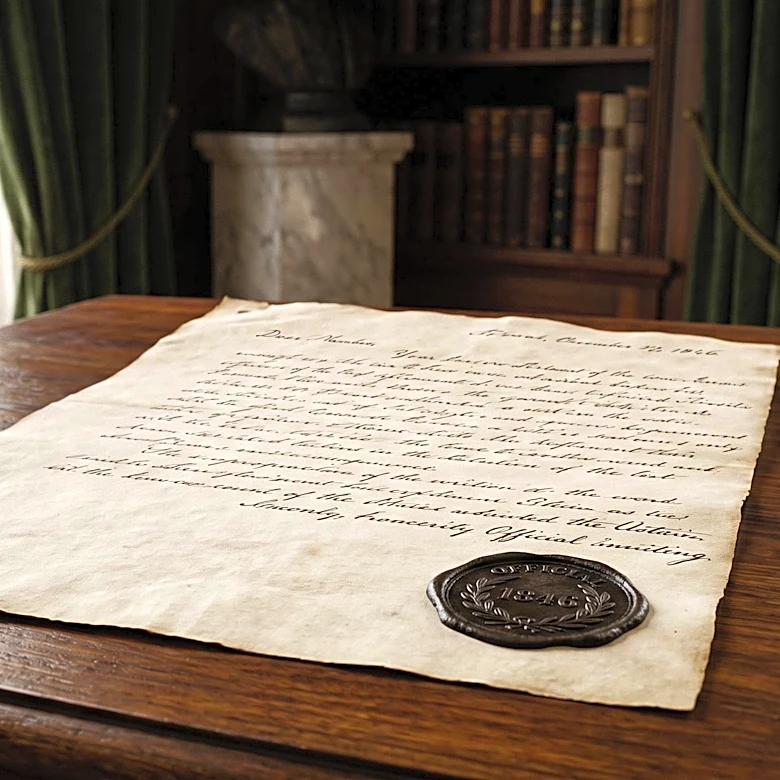
On November 5, 1865, the Shenandoah arrived in the Mersey, off Liverpool. The following day, November 6, Captain Waddell formally surrendered the ship to the British nation by sending a letter to Lord John Russell, the Prime Minister of Great Britain. This act marked the last surrender of the American Civil War and the final official lowering of the Confederate flag. The very last act of the Civil War is often cited as Captain Waddell walking up the steps of Liverpool Town Hall to present his letter of surrender to the UK government. The Shenandoah was the only Confederate warship to circumnavigate the globe.
Fate of the Crew and Aftermath
Following the surrender, the British government faced the decision of what to do with the Confederate crew, particularly given the potential for piracy charges. Many crew members were from the United Kingdom and its colonies, and three even swam ashore in the cold November waters, fearing the worst. However, after a thorough investigation by Crown law officers, it was determined that the officers and crew had not infringed the rules of war or the laws of nations to justify being held as prisoners. Consequently, they were unconditionally released.
On November 8, 1865, a telegram from the government instructed Captain Paynter of HMS Donegal, to whom the Shenandoah was surrendered, to parole all officers and crew who were not British subjects. The crew was mustered, and each man was asked his nationality. While many nations were represented, the majority claimed to be natives of the Southern States of America or "Southern citizens." Interestingly, several who claimed to be Americans had distinct Scottish accents, suggesting origins from the Clyde rather than the Mississippi. The men were paroled and expressed great joy at the prospect of leaving the ship. Before departing, they gave three cheers for Captain Waddell, who acknowledged their compliment. This event separated the Shenandoah from its crew, leaving the vessel anchored in the Sloyne under the charge of men from the Donegal.