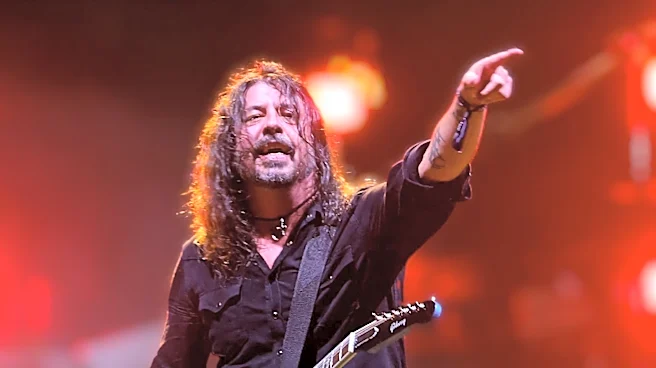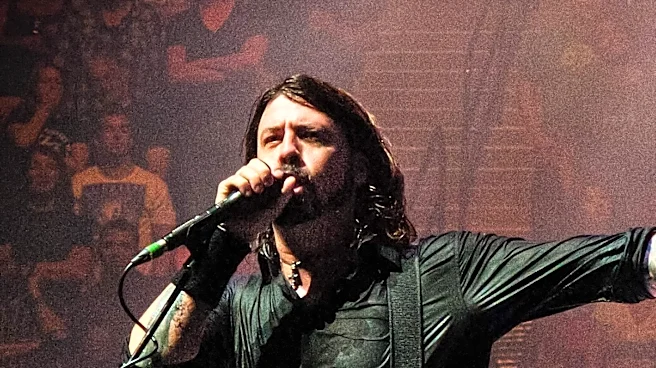




The American rock band Foo Fighters emerged from the ashes of a musical era, founded in 1994 by Dave Grohl. Following the disbandment of his previous band, Nirvana, Grohl embarked on a solo endeavor, initially intending to release personal material. This solo project quickly blossomed into one of the most enduring and successful rock acts of the late 20th and early 21st centuries. The band's journey has been marked by a consistent output of albums,
significant lineup changes, and a steady evolution of their sound, all while maintaining a core identity rooted in powerful rock music.
From Solo Project to Full Band
The origins of Foo Fighters trace back to Dave Grohl's individual efforts in 1994. After Nirvana's end, Grohl took to the studio, recording what would become the band's eponymous debut album. This initial recording process was remarkably swift, with Grohl completing most of the album alone in just six days. The songs quickly garnered interest from record labels, prompting Grohl to transition from a solo artist to forming a full band. To achieve this, he recruited bassist Nate Mendel and drummer William Goldsmith, both formerly of Sunny Day Real Estate. Pat Smear, who had previously toured with Nirvana, joined as a guitarist, solidifying the initial lineup. The newly formed Foo Fighters made their first public performance in February 1995, several months before their debut album was officially released. This period laid the groundwork for the band's future, establishing their presence in the rock scene.
Navigating Lineup Changes and Creative Shifts
The band's early years were characterized by a degree of fluidity in its membership. During the recording of their second album, *The Colour and the Shape* (1997), drummer William Goldsmith departed. Dave Grohl, demonstrating his versatility, re-recorded most of the drum parts for the album himself. Shortly after, guitarist Pat Smear also left the band. These departures led to the recruitment of Taylor Hawkins on drums and Franz Stahl on guitar. Stahl had a prior connection to Grohl, having been in Scream, the band Grohl drummed for before joining Nirvana. However, Stahl's tenure was brief; he was fired before the recording of the group's third album, *There Is Nothing Left to Lose* (1999). The band continued as a trio for a short period until Chris Shiflett joined as guitarist after the completion of *There Is Nothing Left to Lose*, establishing a more stable lineup that would continue for many years.
A Prolific Discography and Enduring Legacy
Throughout their career, Foo Fighters have maintained a prolific release schedule, delivering a series of albums that have defined their sound and expanded their audience. Following *There Is Nothing Left to Lose*, the group released their fourth album, *One by One*, in 2002. This was followed by the ambitious two-disc set *In Your Honor* in 2005, which showcased the band's range by splitting its material between acoustic songs and heavier rock tracks. Their sixth album, *Echoes, Silence, Patience & Grace*, arrived in 2007. The band continued to release new music consistently, including *Wasting Light* (2010–2012), *Sonic Highways* and the *Saint Cecilia EP* (2013–2015), and *Concrete and Gold* (2016–2019). More recently, they released *Medicine at Midnight* and were involved with the film *Studio 666* between 2019 and 2022. The period from 2022 to the present saw the release of *But Here We Are* and *Your Favorite Toy*, following the death of Taylor Hawkins. This extensive discography, coupled with their dynamic live performances and consistent evolution, has cemented Foo Fighters' place as a significant force in American rock music.