




The City of Sydney, encompassing the central business district and surrounding inner-city suburbs of Greater Sydney, New South Wales, Australia, is a vibrant and dynamic urban center. Beyond its administrative role as a local government area, Sydney is renowned for its iconic attractions, diverse climate, and significant cultural and commercial importance. It serves as a focal point for both residents and visitors, offering a blend of historical significance
and modern appeal within its 25 square kilometer expanse.
Iconic Landmarks and Cultural Significance
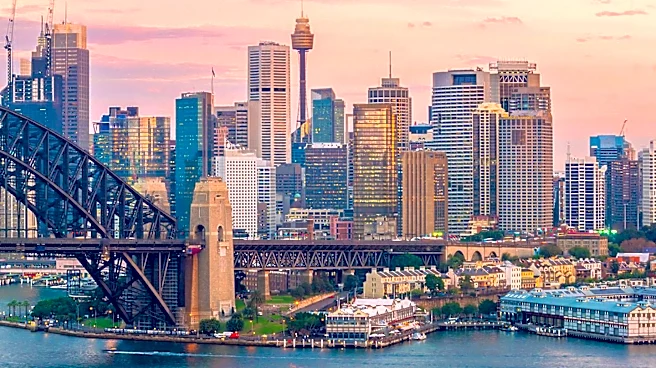
Sydney is home to a collection of world-famous attractions that draw people from across the globe. Among these, the Sydney Opera House stands out as an architectural marvel and a global symbol of Australia. Its distinctive design and role as a performing arts venue contribute significantly to the city's cultural landscape. Another prominent landmark is the Queen Victoria Building, an elaborate 19th-century building that now serves as a shopping center, showcasing historical architecture and commercial vitality.
The Sydney Harbour Bridge, an engineering feat, is another defining feature of the city's skyline. These attractions collectively represent Sydney's rich cultural heritage and its status as a major international destination. They are integral to the city's identity, reflecting both its historical development and its contemporary vibrancy as a center for arts, commerce, and tourism.
Climate and Geographical Context
Sydney experiences a diverse climate, characterized as a temperate oceanic climate. This means the city enjoys mild winters and warm summers, making it an appealing location year-round. The climate contributes to the city's outdoor lifestyle and the enjoyment of its numerous natural and urban spaces. The geographical coordinates of the City of Sydney are approximately 33°52′S 151°12′E, placing it strategically on the southeastern coast of Australia.
Covering an area of 25 square kilometers (9.7 square miles), the City of Sydney is a relatively compact local government area, yet it is densely populated. As of the 2021 census, it had a population of 211,632, with a density of 8,470 people per square kilometer (21,900 per square mile). This density highlights the concentration of activity and residents within its core, making it a bustling urban environment. The city's location and climate are key factors in its appeal and functionality as a major global city.