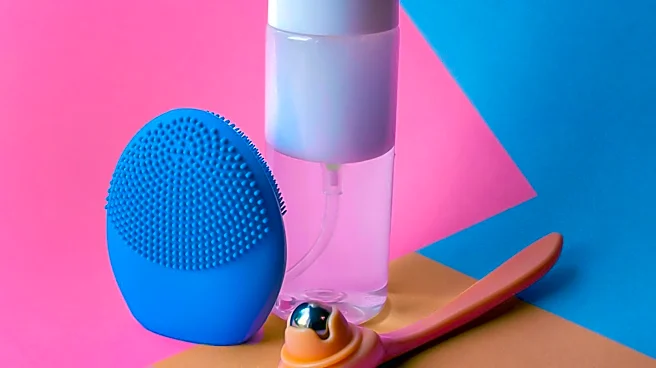








Clarisonic, a brand once synonymous with sonic facial cleansing brushes, carved out a significant niche in the skincare device market. Developed by Pacific Bioscience Laboratories, the brand introduced its innovative technology in the early 2000s, aiming to revolutionize facial cleansing. Its journey from a pioneering startup to a globally recognized name, and ultimately to its discontinuation, offers a look into the dynamic world of beauty technology and consumer
trends.
Origins and Early Innovation
Pacific Bioscience Laboratories was established in 2001 by a team including David Giuliani, Robb Akridge, Steve Meginniss, Ward Harris, and Ken Pilcher. David Giuliani, who served as Clarisonic's CEO, brought prior experience from Optiva, where he co-founded and led the development of the Sonicare line of toothbrushes before selling Optiva in 2000. Robb Akridge, a scientist with a background in microbiology, also came from Optiva Corporation. Ken Pilcher, the lead inventor of Clarisonic's skincare systems, had a diverse engineering background, having developed avionics for the NASA Space Shuttle and medical electronics. This blend of scientific and entrepreneurial expertise laid the groundwork for Clarisonic's entry into the market.
The company launched its first sonic facial-cleansing brush under the Clarisonic brand in 2004. This initial product, later known as the Mia 1, marked a significant departure from traditional facial cleansing methods. The technology aimed to provide a more thorough cleaning experience, removing dirt, makeup, and other pollutants from the face more effectively than manual methods. The innovation quickly gained traction, positioning Clarisonic as a leader in the emerging skincare device category.
Product Expansion and Corporate Acquisition
Following the success of its initial offering, Clarisonic continued to expand its product line. In 2012, the company introduced the Mia 2, which featured two different oscillating speeds, offering users more customization in their cleansing routine. This evolution demonstrated a commitment to enhancing the user experience and catering to diverse skincare needs. The brand also recognized the potential for market expansion beyond its primary demographic.
In 2015, Clarisonic launched the Alpha Fit, a black model specifically marketed toward men, acknowledging the growing interest in skincare among male consumers. This was followed in early 2016 by the Mia Fit, a more compact version of the original device, designed for convenience and portability. These product developments helped Clarisonic maintain its competitive edge and appeal to a broader audience. The brand's success did not go unnoticed, and in 2011, L'Oréal acquired Clarisonic and its parent company, Pacific Bioscience Laboratories, integrating the innovative skincare technology into its vast portfolio.
Market Challenges and Discontinuation
Despite its initial success and market presence, Clarisonic faced increasing challenges. In 2018, Clarisonic devices still accounted for 14% of the skin care device market, indicating a strong, albeit competitive, position. However, the market for skincare devices was growing rapidly, leading to an influx of cheaper alternatives. This increased competition began to erode Clarisonic's market share and profitability.
In September 2016, L'Oréal announced a significant restructuring, eliminating 120 employees at the Clarisonic manufacturing facility in Redmond, Washington, and shifting towards outsourcing the production of the devices. This move signaled an effort to streamline operations and reduce costs. Ultimately, in July 2020, L'Oréal made the decision to discontinue the Clarisonic brand and its products. The official reason cited was a strategic focus on other core business offerings, though it is widely speculated that the actual cause was the intense competition from more affordable alternatives that had flooded the market.