







Guadalajara stands as a vibrant metropolis in western Mexico, recognized not only as the capital of Jalisco but also as a pivotal center for culture, commerce, and technological advancement. With a rich heritage deeply intertwined with Mexican identity, the city has cultivated a dynamic environment that attracts international attention. From its designation as a global city to its leadership in various economic sectors and its commitment to educational
and cultural development, Guadalajara embodies a unique blend of tradition and forward-thinking progress.
A Beacon of Mexican Culture
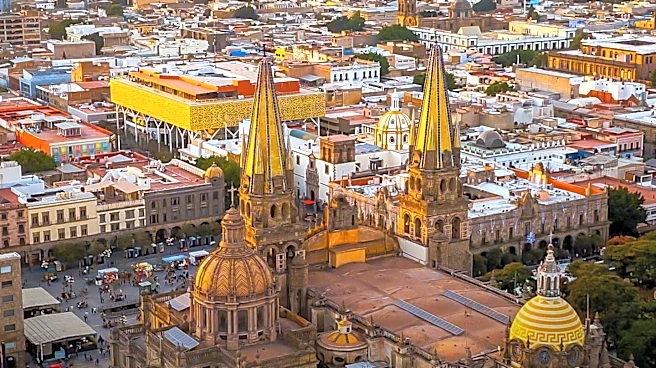
Guadalajara is widely celebrated as one of Mexico's most important cultural centers, serving as the birthplace or home to numerous mainstays of Mexican culture. It is intrinsically linked with Mariachi music, the iconic spirit Tequila, and the traditional dish Birria. This deep cultural roots extend to its vibrant arts scene, hosting exhibitions by international artists and a diverse range of cultural events that draw visitors and participants from across Latin America and the southwestern United States. The city's historic center is a testament to this rich heritage, featuring colonial buildings of religious and civil significance that showcase a blend of indigenous cultural contributions, Mozarabic and Castilian influences, and later modern European styles.Beyond its traditional arts, Guadalajara actively promotes culture through various modern platforms. It boasts several radio stations dedicated to cultural programming, including Red Radio University of Guadalajara (XHUG-F), which broadcasts across the state, neighboring regions, and internationally via the internet, notably as the country's first broadcaster via podcast. The city also produces its own fully cultural television channel, XHGJG-TV, making it one of only two cities in Mexico (alongside Mexico City) to produce such a channel. This commitment to cultural dissemination earned Guadalajara the prestigious designation of World Book Capital for 2022 by UNESCO, further solidifying its reputation as a literary and intellectual hub. The city also hosts major events like the Guadalajara International Film Festival, one of Latin America's most important film festivals, and the Guadalajara International Book Fair, the largest book fair in the Americas.
Economic Powerhouse and Business-Friendly Environment
Guadalajara holds a significant position in Mexico's economy, boasting the third-largest economy and industrial infrastructure in the country. It contributes a substantial 37% to the state of Jalisco's total gross production. The city's economic base is robust and well-diversified, primarily driven by commerce and services, though its manufacturing sector plays a crucial role. In 2007, FDi magazine recognized Guadalajara as having the second strongest economic potential among major North American cities, trailing only Chicago, and ranked it as the most business-friendly Latin American city. This recognition highlights its youthful population, low unemployment rates, and a high volume of recent foreign investment deals.The commercial sector is a dominant force, employing approximately 60% of the population. Guadalajara's commercial activity is second only to Mexico City, focusing on a wide array of products including food and beverages, textiles, electronics, and construction materials. The city is also a national leader in the development and investment of shopping malls, featuring large complexes like Galerías Plaza, one of Latin America's largest, and Andares, a significant mixed-use development. Beyond domestic commerce, Guadalajara has become a major distribution center for its region, attracting international investment due to its relatively affordable, educated, and productive labor force. Exports from the city saw a substantial increase from US$3.92 billion in 1995 to US$14.3 billion in 2003, with a significant portion of manufactured goods exported, primarily to the United States.
A Forward-Looking Smart City
Guadalajara has embraced innovation and technology, earning recognition as Mexico's first Smart City due to its proactive use of developing technologies. This commitment is evident in its participation in global initiatives and its focus on fostering a knowledge economy. In early 2013, Guadalajara became part of the world's first "Cluster Smart Cities," an alliance with Dublin, San Jose (California), and Cardiff, aimed at exchanging information and experiences, particularly in agribusiness and health sciences. This collaboration underscores the city's ambition to attract technology and foster innovation.The city was also chosen as the official venue for the first "Digital Creative City of Mexico and Latin America," positioning it as a spearhead for Mexico's potential in this area. From October 25 to 28, 2015, Guadalajara hosted the first conference of the Smart Cities Initiative, further cementing its role as a leader in urban technological advancement. While facing competition from regions like China in high-volume, low-wage electronics industries, Guadalajara has strategically shifted towards high-mix, mid-volume, and value-added services, such as automotive manufacturing. Its traditional advantage of proximity to the U.S. market remains a key factor in its competitiveness. The city has also seen growth in its information technology services sector, with several major Indian IT companies establishing offices, leveraging Mexico's affordability and strategic location for accessing the U.S. market.