







Peanut butter, a staple in many households today, boasts a rich and surprisingly ancient history that spans continents and centuries. While often associated with modern American cuisine, its origins can be traced back to early civilizations that recognized the nutritional value and versatility of ground peanuts. This journey from a simple paste to a globally consumed spread involves various cultures and innovations, highlighting its enduring appeal.
Early Beginnings: Aztec and Inca Innovations
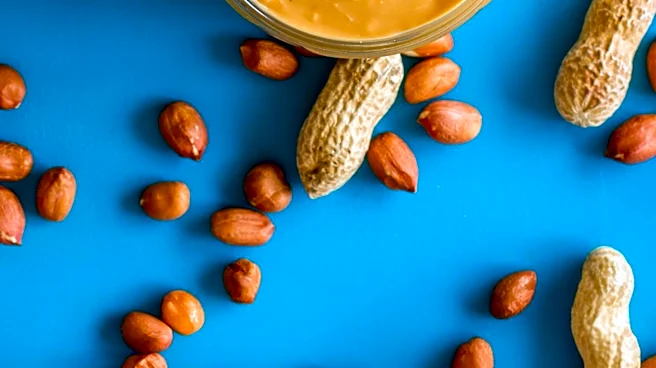
The earliest known references to peanut butter-like substances point to the Aztec and Inca civilizations. These ancient cultures, long before modern food processing, were grinding roasted peanuts into a paste. This practice suggests an early understanding of how to process peanuts for consumption, potentially for both sustenance and medicinal purposes. There are even reports indicating that 16th-century Aztecs utilized peanut paste to alleviate aching gums, showcasing an early application beyond just food.
This historical context is crucial because it demonstrates that the concept of a peanut paste is not a recent invention but rather a continuation of ancient culinary and practical traditions. The ingenuity of these early civilizations in transforming a raw ingredient into a usable paste laid a foundational idea that would be rediscovered and refined much later.
Modern Production and Early American Adoption
The late 19th and early 20th centuries marked the beginning of modern peanut butter production processes. Several individuals are credited with key advancements. Marcellus Gilmore Edson of Montreal, Quebec, obtained the first patent for a method of producing peanut butter from roasted peanuts using heated surfaces in 1884. His patent described a process of milling roasted peanuts until they reached a "fluid or semi-fluid state," with the addition of sugar to harden its consistency, resulting in a product with a consistency similar to butter or lard.
Around the same time, a St. Louis businessman named George Bayle began producing and selling peanut butter as a snack food in 1894. John Harvey Kellogg, known for his breakfast cereals, also played a role, advocating for plant-based foods. He received a patent in 1898 for a process using boiled peanuts, serving peanut butter to patients at his Western Health Reform Institute as a high-protein food that didn't require chewing. Initially, peanut butter was considered a food for the wealthy, gaining popularity in expensive health care institutes before becoming more widely accessible.
The Evolution of Texture and Brands
The 20th century saw significant innovations in peanut butter's texture and the rise of prominent brands. Joseph Lambert, who worked at Kellogg's Battle Creek Sanitarium, and Dr. Ambrose Straub, who patented a peanut-butter-making machine in 1903, contributed to the mechanization of its production. A major breakthrough came in 1922 when chemist Joseph L. Rosefield invented a process for making smooth peanut butter that prevented oil separation by using partially hydrogenated oil. Rosefield licensed his invention and later began producing his own peanut butter under the Skippy brand in 1932.
Under the Skippy brand, Rosefield further refined the churning process for creamy peanut butter, achieving a smoother consistency. He also pioneered the "chunky" style by mixing peanut fragments into the paste. In 1955, Procter & Gamble introduced Jif, a brand that distinguished itself with a sweeter recipe incorporating sugar and molasses. Beyond North America, South Africa saw its first peanut butter production in 1926 by Alderton Limited, later taken over by Tiger Brands under the Black Cat brand. The Dutch term for peanut butter, "pindakaas" (peanut cheese), reflects an earlier, more solid peanut-based dish from Suriname, highlighting the diverse global interpretations and adaptations of this versatile food.