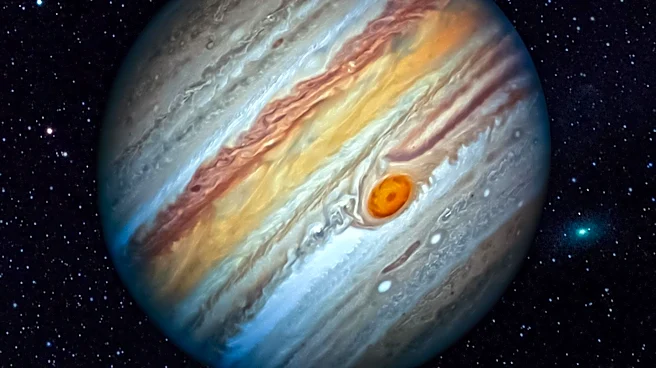



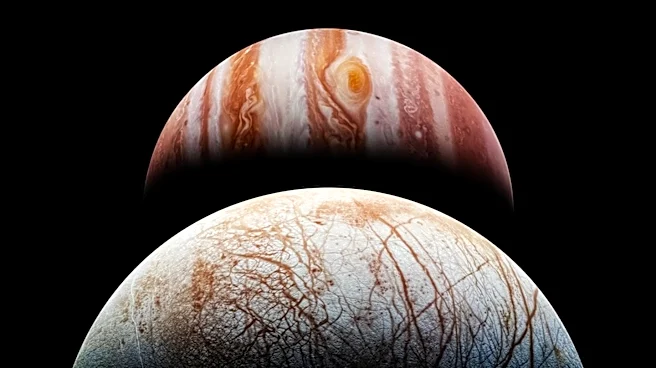


In July 1994, a cosmic event of unprecedented scale unfolded as Comet Shoemaker-Levy 9 collided with Jupiter. This event marked the first time astronomers could observe a collision between two significant bodies in the solar system. The impacts provided a unique opportunity to study Jupiter's atmosphere and the dynamics of such cosmic collisions, offering insights that were previously beyond reach.
The Journey of Comet Shoemaker-Levy 9
Comet Shoemaker-Levy 9 was discovered in 1993 by astronomers
Carolyn and Gene Shoemaker and David Levy. The comet was already fragmented into more than 20 pieces, a result of its close encounter with Jupiter in July 1992. This encounter subjected the comet to the planet's immense gravitational forces, tearing it apart. The fragments were then captured in a two-year orbit around Jupiter, a rare occurrence that set the stage for the dramatic collision.
The comet's orbit around Jupiter was highly eccentric, and calculations indicated that the fragments would collide with the planet in July 1994. This prediction generated significant excitement within the astronomical community, as it was an unprecedented opportunity to observe the effects of such a collision.
The Impact and Observations
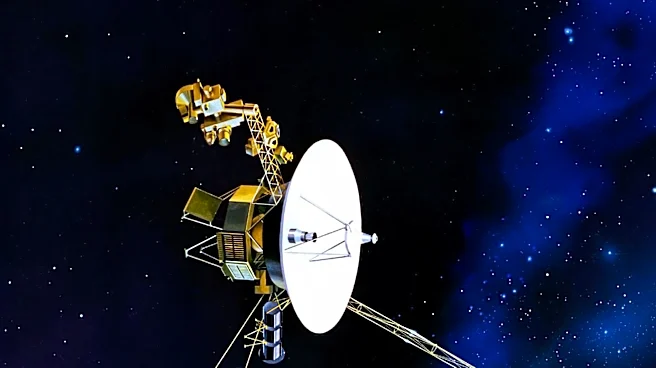
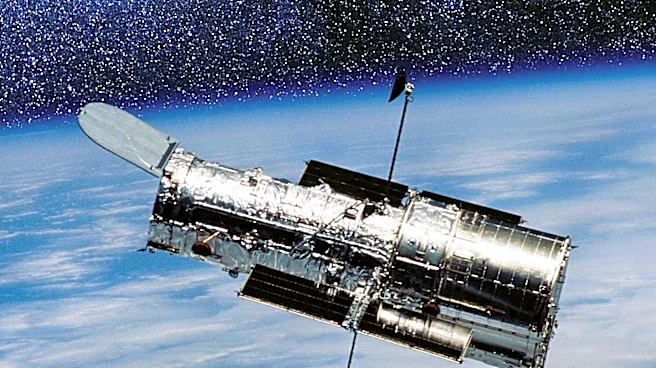
The impacts began on July 16, 1994, and continued for several days. Each fragment, labeled from A to W, struck Jupiter's southern hemisphere at speeds of about 60 km/s. The impacts were observed by a host of telescopes and spacecraft, including the Hubble Space Telescope and the Galileo spacecraft, which was en route to Jupiter at the time.
The collision produced massive fireballs and plumes that rose thousands of kilometers above Jupiter's cloud tops. These plumes were visible from Earth, providing a spectacular show for astronomers and the public alike. The impacts also left dark scars on Jupiter's atmosphere, which persisted for months, allowing scientists to study the aftermath in detail.
Scientific Insights and Legacy
The collision of Comet Shoemaker-Levy 9 with Jupiter offered valuable insights into the planet's atmosphere. The impacts caused eruptions of material from beneath the cloud layers, revealing information about the composition and dynamics of Jupiter's atmosphere. Scientists were able to track high-altitude winds and study the relationship between the planet's magnetosphere and atmosphere.
Moreover, the event highlighted the potential threat of cosmic collisions to planets, including Earth. It underscored the importance of monitoring near-Earth objects and understanding the dynamics of such impacts. The Shoemaker-Levy 9 collision remains a landmark event in the study of planetary science, providing a wealth of data that continues to inform our understanding of the solar system.