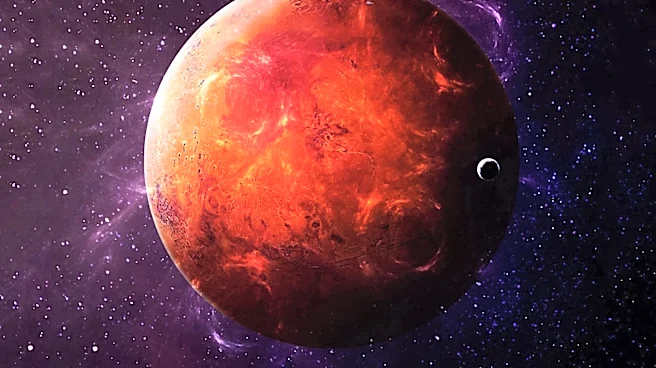





Mars, the fourth planet from the Sun, is orbited by two intriguing moons: Phobos and Deimos. Discovered in 1877 by Asaph Hall, these moons have captivated scientists with their irregular shapes and mysterious origins. Despite their small size compared to Earth's Moon, Phobos and Deimos offer a wealth of information about the Martian system and the broader solar system.
Physical Characteristics
Phobos and Deimos are notably smaller than Earth's Moon, with Phobos measuring 22.2
km in diameter and Deimos 12.6 km. Their irregular shapes suggest a tumultuous history, possibly involving collisions or other disruptive events. Phobos, the larger of the two, orbits Mars at a distance of 9,377 km, completing an orbit in just 7.66 hours. Deimos, on the other hand, orbits at 23,460 km and takes 30.35 hours to complete an orbit.
These moons are among the least reflective bodies in the solar system, with Phobos having an albedo of 0.071. Their surfaces are marked by craters and grooves, with Phobos featuring the prominent Stickney crater. The grooves on Phobos have sparked various theories regarding their formation, including the possibility of tidal forces from Mars playing a role.
Theories of Origin
The origins of Phobos and Deimos remain a topic of debate among scientists. Two main hypotheses have emerged: one suggests that the moons originated from Mars itself, possibly as a result of a giant impact event. This event may have created the Martian dichotomy and the Borealis Basin, leading to the formation of the moons from ejected material.
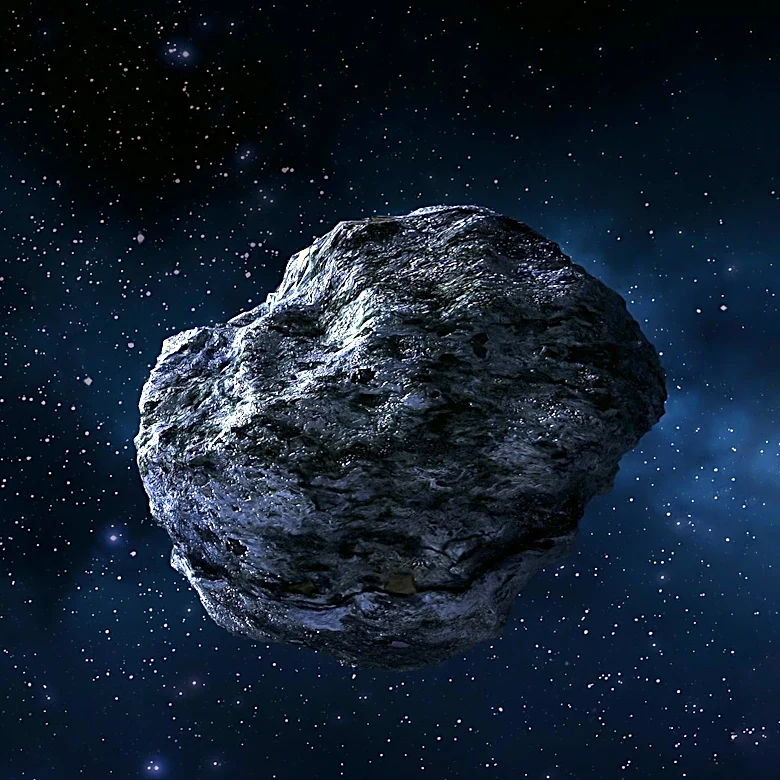
The second hypothesis posits that Phobos and Deimos are captured asteroids, similar in composition to carbonaceous C-type asteroids. Their spectra, albedo, and density are akin to those of C- or D-type asteroids, supporting the capture theory. However, the circular orbits of the moons, which lie almost exactly in Mars's equatorial plane, present challenges to this hypothesis, as a capture origin would require mechanisms to circularize their initially eccentric orbits.
Future Exploration
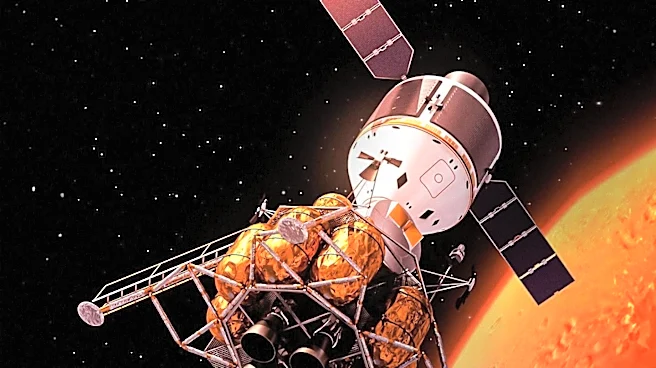
Upcoming missions aim to return samples from Phobos, which may help resolve the debate over the moons' origins. These missions will provide valuable insights into the composition and history of Phobos and Deimos, potentially confirming or refuting the current hypotheses.
The study of Phobos and Deimos continues to be a dynamic field, with researchers eager to uncover the secrets of these enigmatic moons. As technology advances, the potential for new discoveries grows, promising to deepen our understanding of Mars and its celestial companions.