




The STS-65 mission, launched on July 8, 1994, aboard the Space Shuttle Columbia, marked a significant achievement in international space collaboration. This mission was not only a scientific endeavor but also a demonstration of the power of global cooperation in advancing space exploration. With the International Microgravity Laboratory (IML-2) onboard, STS-65 brought together scientists from various countries, showcasing the potential of collaborative
efforts in space research.
The Role of International Partners
STS-65 was an international mission involving scientists from NASA, the European Space Agency (ESA), Canada, France, Germany, and Japan. This diverse team worked together to provide the worldwide science community with a variety of complementary facilities and experiments. The collaboration was crucial in broadening the scope of investigations and applying results from one mission to the next.
The IML-2 module housed twenty racks of experiments, each representing the contributions of different countries. This setup allowed for a wide range of scientific inquiries, from microgravity science to life sciences research. The mission demonstrated how international partnerships could enhance the quality and quantity of scientific data collected in space.
Scientific Contributions and Achievements
The international collaboration on STS-65 led to significant scientific achievements. The mission's microgravity research covered fundamental physics and material behavior, while life sciences experiments focused on the effects of reduced gravity on biological systems. These studies provided valuable insights into the challenges faced by astronauts and the potential for new technologies and materials.
The diverse range of experiments conducted during STS-65 highlighted the benefits of pooling resources and expertise from multiple countries. This approach not only increased the scientific output but also fostered a sense of unity and shared purpose among the participating nations.
Legacy of STS-65
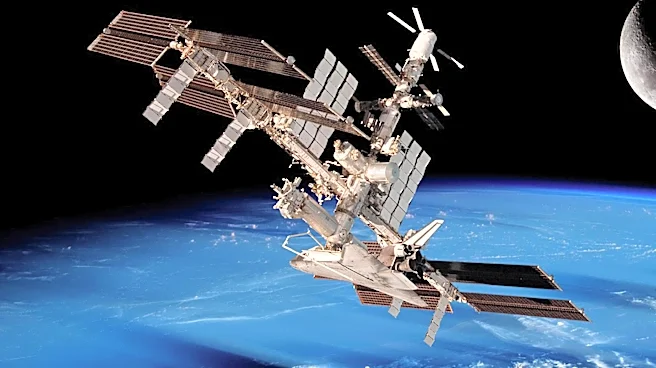
The success of STS-65 set a precedent for future international collaborations in space exploration. The mission demonstrated that by working together, countries could achieve more than they could individually. This spirit of cooperation has continued to influence space missions, including the development of the International Space Station.
STS-65's legacy lies in its ability to bring together scientists from different backgrounds and cultures, united by a common goal. The mission showed that space exploration is not just about technological advancements but also about building bridges between nations. As we look to the future of space travel, the lessons learned from STS-65 will continue to guide international efforts in exploring the final frontier.