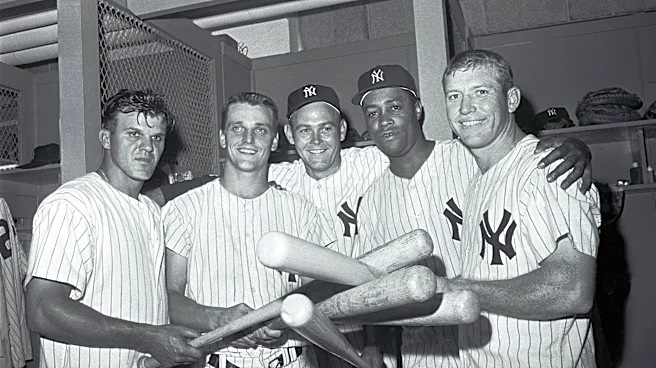


The 1956 World Series marked the 53rd edition of Major League Baseball's championship series, pitting the American League champion New York Yankees against the National League champion Brooklyn Dodgers. This best-of-seven playoff was a highly anticipated rematch of the 1955 series, where the Dodgers had claimed victory. The 1956 series held additional historical significance as it was the last World Series between two teams from the same state until
1974, the last between two teams from the same metropolitan area until 1989, and the final "Subway Series" until 2000, largely due to the Dodgers and the New York Giants relocating to California after the 1957 season. The Yankees ultimately emerged victorious, securing their 17th championship in a thrilling seven-game series.
Early Dodger Dominance and Yankee Struggles
The series began with the Brooklyn Dodgers asserting their dominance, winning the first two games. Game 1, played at Ebbets Field, saw the Yankees take an early 2-0 lead in the first inning, thanks to a Mickey Mantle home run. However, the Dodgers quickly responded with a Jackie Robinson homer in the second and a three-run shot by Gil Hodges in the third, ultimately winning 6-3 behind Sal Maglie's complete game. The Yankees managed nine hits but only three runs, while the Dodgers also had nine hits but capitalized more effectively.
Game 2, also at Ebbets Field, was a high-scoring affair. Neither starting pitcher, Don Newcombe for the Dodgers or Don Larsen for the Yankees, lasted beyond the second inning. Newcombe gave up a Yogi Berra grand slam, while Larsen allowed four unearned runs. The Dodgers' Don Bessent pitched the final seven innings to secure a 13-8 victory. This game set some peculiar records; it was one of only three World Series games where a grand slam-hitting team failed to win, and the eight runs scored by the Yankees represented the largest number of runs accumulated by a losing team that still went on to win the series. The combined 21 runs were also the most since Game 2 of the 1936 Series.
The Yankees' Resurgence and Historic Pitching
Following their initial setbacks, the New York Yankees mounted a remarkable comeback, largely fueled by exceptional pitching. Starting with Game 3, New York pitchers threw five consecutive complete games, a feat that ultimately sealed their championship. Game 3, held at Yankee Stadium, saw Whitey Ford earn the win for the Yankees in a 5-3 contest, with Billy Martin and Enos Slaughter contributing home runs. This victory marked a turning point, as the Yankees began to chip away at the Dodgers' lead.
Game 4 continued the Yankees' momentum, with another win at Yankee Stadium, this time 6-2. The most iconic moment of the series, and arguably one of the greatest in baseball history, occurred in Game 5. Don Larsen, despite his shaky performance in Game 2, pitched a perfect game, striking out seven batters. This historic achievement, a 2-0 Yankees victory, earned Larsen the Series MVP award. The Dodgers, who had scored 19 runs in the first two games, managed only six runs in the remaining five games, with just one in the final three. After a 1-0 Dodgers win in Game 6, the Yankees dominated Game 7 with a 9-0 shutout at Ebbets Field on October 10, securing their 17th World Series title.