







The croissant, a beloved crescent-shaped French pastry, has a rich history that traces back to the Austrian kipferl. While today it is synonymous with French breakfast and patisseries, its journey to becoming a global culinary icon involved significant evolution and adaptation. The modern croissant, as we know it, truly began to take shape in the early 20th century, transforming from a simple yeast dough into the flaky, buttery viennoiserie enjoyed
worldwide. This transformation highlights a fascinating interplay of cultural exchange and culinary innovation that ultimately cemented the croissant's place in gastronomic history.
Early Origins: The Austrian Kipferl
The story of the croissant begins with the Austrian kipferl, a crescent-shaped bread that has existed since at least the 13th century. This precursor to the croissant was typically made from a simple yeast dough, often without the rich butter layers characteristic of its French descendant. Historical accounts suggest that crescent-shaped breads have been around since the Renaissance, and even crescent-shaped cakes might date back to antiquity. However, the direct lineage to the modern croissant is most clearly drawn from the kipferl.In the late 1830s, an Austrian artillery officer named August Zang played a pivotal role in introducing the kipferl to Paris. Zang established a bakery in the French capital where he served this Austrian specialty. The popularity of Zang's kipferl in Paris inspired French bakers to refine the recipe, setting the stage for the pastry's future development. This period marked a crucial cross-cultural exchange, where an Austrian tradition began to be reinterpreted through a French culinary lens.
The French Transformation: Lamination and Modernization
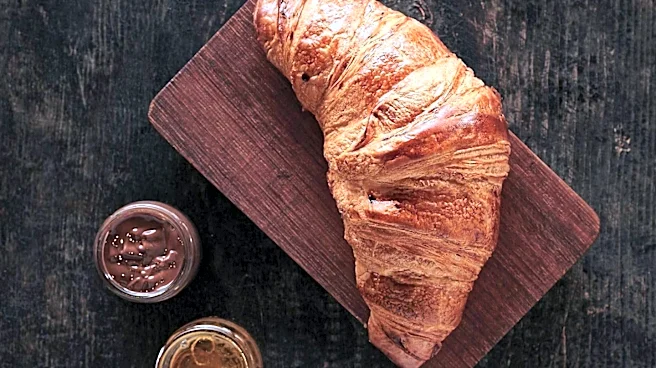
The true transformation of the kipferl into the modern croissant occurred in the early 20th century. French bakers replaced the brioche dough of the original kipferl with a yeast-leavened laminated dough. This innovative technique, known as lamination, involves layering butter within the dough and then repeatedly folding and rolling it. The process creates numerous thin layers of dough and butter, which, when baked, result in the croissant's characteristic flaky and airy texture.The first documented recipe for a croissant in France appeared in 1915, attributed to French baker Sylvain Claudius Goy. Goy's recipe specifically utilized the lamination technique, which was key to achieving the delicate, crumbly layers that define the modern croissant. This development was a significant departure from the simpler kipferl and established the croissant as a distinct French pastry. The rise in popularity of cafes and patisseries in the 20th century further propelled the croissant into an essential part of French breakfast and snacking culture.
Global Spread and Variations
Today, the production and consumption of croissants are widespread across the globe. While the classic French croissant remains popular, numerous variations have emerged. For instance, the pain au chocolat is a similar pastry, but rectangular in shape and filled with chocolate. Croissants are also served with various other fillings, such as ham and cheese, transforming them into savory sandwiches.In Portugal, there are two main types of croissants. One is similar to the French version, often plain or filled with custard, chocolate, fruit jam, or a traditional Portuguese egg yolk and sugar cream called doce de ovo, usually topped with powdered sugar. The second Portuguese type has a consistency closer to brioche and is commonly eaten with ham and cheese, sometimes even served toasted with butter. While the sweet croissant is a breakfast or tea item, the brioche-like version is considered a more substantial meal, often prepared for picnics or travel. This global adaptation demonstrates how a pastry with humble Austrian beginnings has been embraced and reinterpreted by diverse culinary traditions, solidifying its status as a truly international delight.