







The quadratus plantae, historically recognized as the flexor accessorius, is a skeletal muscle found within the second layer of the sole of the foot. This muscle plays a crucial role in the intricate mechanics of foot movement, particularly in the flexion of the toes. Its distinct anatomical features and functional contributions make it a subject of interest in understanding the complex structure of the human foot. Unlike many other muscles, the quadratus plantae possesses
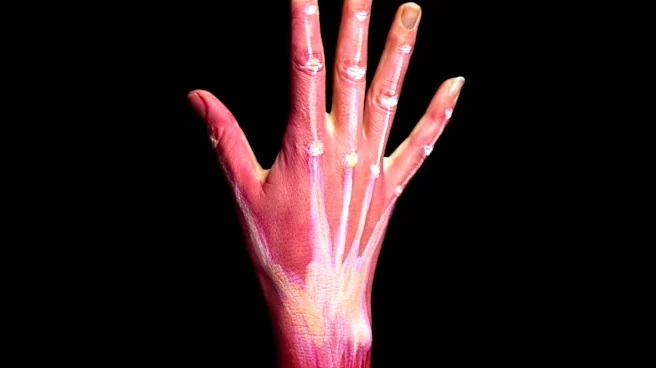
a unique characteristic: it is one of the few muscles in the foot that does not have a corresponding homolog in the hand, highlighting its specialized function.
Origin and Structure of the Quadratus Plantae
The quadratus plantae muscle originates from two distinct heads, which are separated by the long plantar ligament. The medial head, which is typically larger and more muscular, is anchored to the medial concave surface of the calcaneus, positioned below the groove that accommodates the tendon of the flexor hallucis longus. This placement suggests a close functional relationship with other deep foot structures.
Conversely, the lateral head of the quadratus plantae is flat and tendinous. It arises from the lateral border of the inferior surface of the calcaneus, situated in front of the lateral process of its tuberosity, and also from the long plantar ligament. The dual origin from both the calcaneus and the long plantar ligament provides a broad base for the muscle, enabling its specific actions within the foot.
Insertion and Functional Role
The two portions of the quadratus plantae converge at an acute angle, forming a flattened band. This band then inserts into the lateral margin and both the upper and under surfaces of the tendon of the flexor digitorum longus. This insertion point is particularly significant as it creates a groove where the flexor digitorum longus tendon is lodged, indicating a direct interaction between the two muscles.
The primary action of the quadratus plantae is to assist in flexing the second to fifth toes. Its crucial role lies in offsetting the oblique pull of the flexor digitorum longus. Without the quadratus plantae, the flexor digitorum longus would pull the toes obliquely, rather than straight down. By correcting this oblique pull, the quadratus plantae ensures a more effective and direct flexion of the toes, which is vital for efficient foot function during activities like walking and running. The muscle usually sends slips to the tendons of the flexor digitorum longus that extend to the second, third, and fourth toes, further emphasizing its role in fine-tuning toe movement.
Innervation and Positional Context
The quadratus plantae muscle receives its innervation from the lateral plantar nerve, specifically from spinal segments S1 and S2. This nerve supply ensures that the muscle can effectively receive signals for contraction and relaxation, contributing to coordinated foot movements. The muscle is also anatomically separated from the muscles of the first layer of the sole of the foot by the lateral plantar vessels and nerve. This positional detail highlights its deep location and its relationship with the neurovascular structures of the foot, underscoring the intricate layering and organization of the muscles in the sole.