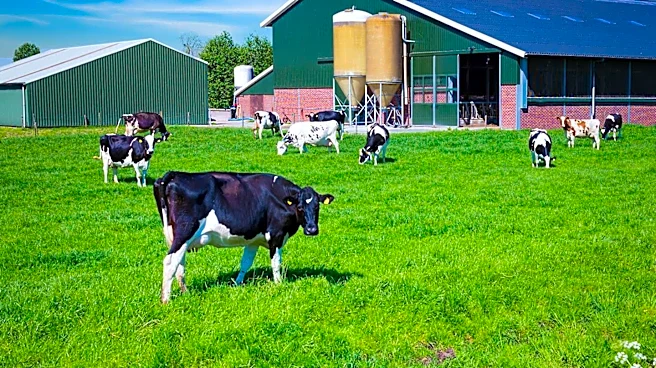









Gouda cheese, a yellow cow's milk cheese originating from the Netherlands, has a rich history and a distinctive production process that has made it popular worldwide. Named after the city of Gouda in South Holland, this cheese is not just a local delicacy but a generic name for numerous similar cheeses produced globally. Its versatility ranges from young and elastic to old and hard, and from low-fat to high-fat varieties, catering to a wide array
of palates. The journey of Gouda cheese, from its traditional roots in Dutch culture to its modern industrial production and global recognition, highlights its significant cultural and economic impact.
Traditional Roots and Evolution
The history of Gouda cheese is deeply intertwined with Dutch culture, particularly the role of women in cheesemaking. Traditionally, cheesemaking was a task performed by women in Dutch households, with farmers' wives diligently passing down their skills to their daughters. This tradition ensured the continuity of the craft through generations. By the Dutch Golden Age of the 17th century, modern Gouda had already evolved into a recognizable form. The city of Gouda itself played a central role in the cheese's early commercial life. All cheeses produced in the region would be brought to the market square in Gouda for sale.
At these markets, a unique ritual bargaining system called "handjeklap" was used. Buyers and sellers would clap each other's hands and shout out various prices until an agreement was reached. Once a price was settled, porters, identifiable by their distinctively colored straw hats, would carry the typically 35-pound (16 kg) cheeses in barrows to the weigh house to finalize the sale. While most Dutch Gouda is now produced industrially, a protected form known as "boerenkaas," or "farmer's cheese," is still made by about 300 Dutch farmers using unpasteurized milk, preserving the traditional methods.
The Distinctive Gouda Production Process
The creation of Gouda cheese involves a specific process that contributes to its unique flavor and texture. It begins with cultured milk, which is then curdled. Following this, some of the whey is drained, and water is added to the batch, making Gouda a "washed-curd" cheese. This washing step is crucial as it removes some of the lactose, which in turn reduces lactic acid, resulting in a sweeter cheese. The mixture, which is about 10% curds, is then pressed into circular molds for several hours. These molds are responsible for giving Gouda its characteristic round shape.
After molding, the cheese is soaked in brine. This brining process is essential for imparting a distinctive taste to both the cheese and its rind. The cheese is then dried for a few days before being coated with a yellow wax or plastic-like coating. This coating serves a practical purpose: it prevents the cheese from drying out during the aging process. Aging is a critical stage where the cheese hardens and its flavor develops. Dutch cheesemakers classify Gouda into six gradations based on age: Young (4 weeks), Young matured (8–10 weeks), Matured (16–18 weeks), Extra matured (7–9 months), Old (10–12 months), and Very old (12–21 months). As Gouda ages, it develops a caramel sweetness and may exhibit a slight crunchiness from cheese crystals, especially in older varieties. Young Gouda is often described as having a "lightly fudgy with nuts, but very, very, very mild" flavor, while a more mature farmhouse Gouda can have a "lovely fruity tang" with a "sweet finish," potentially developing an "almost butterscotch flavor" if aged over two years.
Sensory Profile and Culinary Uses
Gouda cheese offers a wide spectrum of sensory experiences, influenced significantly by its age. Its moisture content can vary from 25-46%, fat content from 21-49% by weight (or 37-80% of dry matter), and salt content from 0.9-2.4%. Six key compounds contribute to Gouda's flavor and aroma: diacetyl, 2-methylbutanal, 3-methylbutanal, methional, ethyl butyrate, and acetic acid. Depending on its maturation, Gouda's flavor can range from mild and creamy to harsh and acidic. Matured Gouda, after prolonged ripening, develops a rich, caramel-like flavor, often accompanied by brothy, malty, or nutty undertones. The finish can be silky or sharp, depending on the aging period. Young Gouda typically has a smooth, creamy texture and a pale ivory to light yellow color, while older Gouda becomes firmer, more crumbly, and takes on a richer golden hue, sometimes with visible small crystals.
In the Netherlands, Gouda is commonly enjoyed as a snack. Cubes of Gouda are frequently served with Dutch mustard, and older varieties are sometimes topped with sugar or apple butter. It is also a popular accompaniment to beer in Dutch Bruin cafés. This versatility in flavor and texture, coupled with its rich history and traditional production methods, solidifies Gouda's status as a beloved and globally recognized cheese.