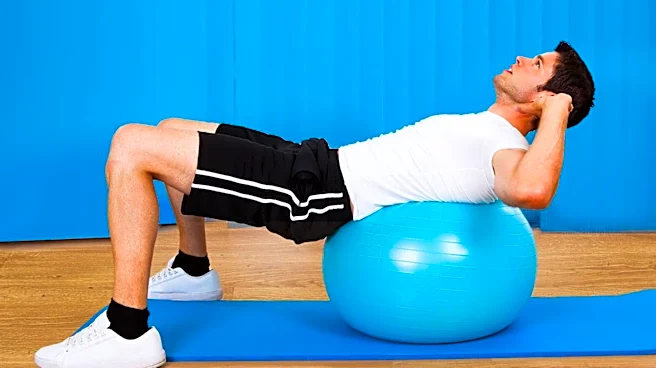







The exercise ball, often called a stability ball or fitness ball, is more than just an inflatable sphere; it's a sophisticated tool designed to leverage the principle of instability for enhanced physical training. Unlike exercising on a firm, flat surface, the inherent instability of the exercise ball forces the body to constantly adjust and engage a greater number of muscles to maintain balance. This approach, known as "unstable training," is at the heart
of its effectiveness, particularly for strengthening the core and improving overall body control. Understanding the physiological responses to this instability reveals why the exercise ball has become a valuable asset in physical therapy, athletic training, and general fitness.
Engaging More Muscles Through Instability
The fundamental advantage of using an exercise ball stems from its unstable nature. When an individual performs exercises on the ball, their body must continuously respond to its movement to remain balanced. This constant adjustment activates a wider array of muscles than would typically be engaged during similar exercises on a stable surface. Over time, these muscles, particularly those responsible for maintaining posture and stability, become stronger. This increased muscle recruitment occurs without necessarily increasing the total external load, making it an efficient way to build strength and endurance.
This principle is especially beneficial for runners, who often incorporate ball exercises into their routines to improve stability and prevent injuries. Even common dumbbell exercises, such as dumbbell flies, can be adapted for use on an exercise ball, further challenging the body's stabilizing muscles and enhancing the overall effectiveness of the workout.
Focusing on Core Musculature Activation
One of the most frequently cited benefits of exercise ball programs is their profound impact on the core body muscles. These include the abdominal muscles and back muscles, which are crucial for trunk stability, posture, and movement. Moving an exercise onto an unstable surface, such as an exercise ball, significantly enhances the activation of this core musculature. For instance, exercises like curl-ups or push-ups performed on an exercise ball yield a better activation of these vital muscle groups.
Research indicates that an unstable surface increases the activation of the rectus abdominis muscles, commonly known as the abdominals. This allows for greater activity per exercise compared to performing the same movements on a stable platform. Electromyographic (EMG) activity, which measures the electrical activity produced by muscles, shows a greater amount of activity during exercises like curl-ups on an exercise ball. This scientific evidence underscores the ball's effectiveness in targeting and strengthening the core, leading to increased trunk strength and potentially greater resistance to injury.
Beyond Core Strength: Broader Applications
While core strength is a primary focus, the benefits of unstable training extend to other areas. Performing standard exercises like push-ups on an unstable surface can boost the activation of core trunk stabilizers, contributing to overall body control and functional strength. The continuous need to stabilize oneself during exercises on the ball also improves proprioception, the body's awareness of its position in space, which is vital for coordination and balance.
Despite its widespread use in exercise, it's important to note that simply sitting on an exercise ball as an alternative to a regular chair, without engaging in additional exercises, lacks scientific evidence of benefits. In fact, it can lead to discomfort due to the absence of back support. However, its utility in active exercise, physical therapy, and even during labor as a "birth ball" to aid fetal positioning and comfort, remains well-established due to the unique physiological challenges and benefits it offers.