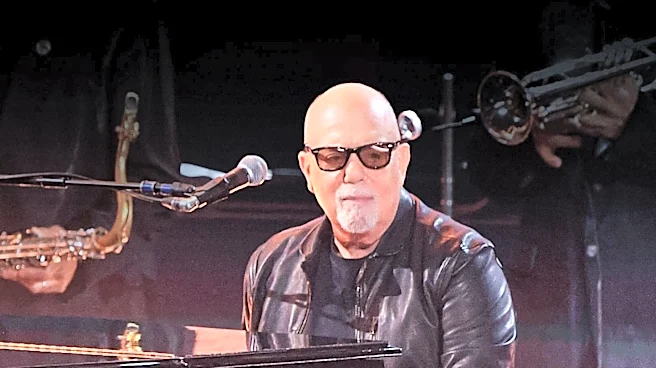










Billy Joel's debut studio album, "Cold Spring Harbor," released on November 1, 1971, by Family Productions, is notable not just for marking the beginning of his solo career, but also for the significant production errors and contractual disputes that plagued its initial release. These issues profoundly impacted Joel's early career and the album's reception, making its story a cautionary tale in the music industry. The album's journey from its flawed
original pressing to its later corrected reissue highlights the challenges artists can face in maintaining control over their work.
The Mastering Error That Altered a Voice
The most infamous problem with the original 1971 release of "Cold Spring Harbor" was a critical mastering error. The songs were processed and recorded at an incorrect speed, approximately 8% faster than intended. This technical oversight resulted in Billy Joel's voice sounding unnaturally high, about a half-step higher than its natural pitch. Joel himself humorously compared his altered vocals to those of the Bee Gees or Alvin and the Chipmunks, indicating the severity of the distortion.
This error was not a minor detail; it fundamentally changed the sound of the album and Joel's vocal performance. Upon hearing the finished product, Joel was reportedly furious. He recounted organizing a listening party with friends, and after experiencing the album's flawed sound, he threw the record like a frisbee in frustration. This incident underscores the deep personal and professional impact of the mastering mistake on the artist.
Artie Ripp's Role and the Contractual Bind
Artie Ripp, the owner of Family Productions and, crucially, the owner of the original master tapes, was directly responsible for this production error. This mistake not only marred the album but also cost him his friendship with Billy Joel. The relationship between Joel and Ripp was already complicated by a restrictive contract that Joel had signed at the age of 22.
This ten-record contract stripped Joel of all rights to his original master tapes and, perhaps even more significantly, to the publishing rights for all his current and future songs. This meant that even as Joel's career progressed and he achieved greater fame with subsequent albums, Ripp continued to hold considerable power over his early work and future earnings. The contractual arrangement became a major point of contention and a significant hurdle for Joel to overcome in his career.
The 1983 Reissue and Lingering Disputes
Twelve years after its initial release, in 1983, a remixed, edited, and speed-corrected version of "Cold Spring Harbor" was issued by Columbia Records. Artie Ripp, still the owner of the original master tapes, oversaw this revised edition. Larry Elliot also participated in the re-recording and readjustment process. However, this updated version was created without Billy Joel's direct intervention, highlighting the continued control Ripp exercised over the material.
To improve the album's sound, Ripp brought in studio musicians like Mike McGee on drums, Al Campbell on synthesizers, and L.D. Dixon on Fender Rhodes. These musicians added new rhythmic sections to tracks such as "Everybody Loves You Now" and "Turn Around." However, the reissue also involved significant alterations to the original recordings. For instance, "You Can Make Me Free" was shortened by nearly three minutes, with much of its ending and transition removed. Additionally, the bass, drums, and orchestration on "Tomorrow Is Today" were eliminated. While the album was finally released at the correct speed, it was stripped of Jimmie Haskell's original orchestration, presenting a different sonic experience from Joel's initial vision.
Despite Joel's acrimonious departure from Family Productions, Ripp continued to collect royalties on sales of Joel's records for many years, up until 1986's "The Bridge." It was only after intense pressure from CBS/Columbia Records president Walter Yetnikoff, who reportedly threatened Ripp, that the publishing rights to Joel's song catalog were reluctantly sold back to Joel. This long-standing dispute underscores the profound and lasting impact of the initial contractual agreements and production errors on Billy Joel's career and the legacy of "Cold Spring Harbor."