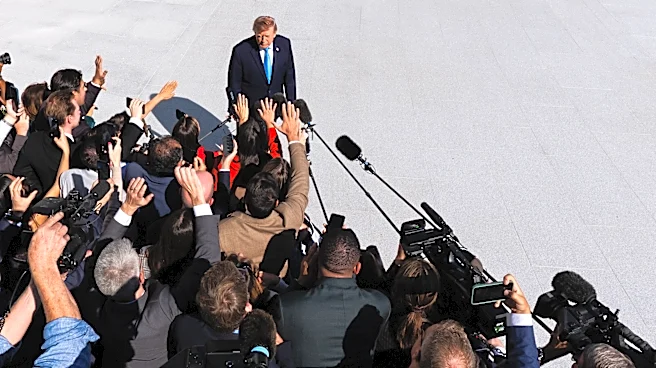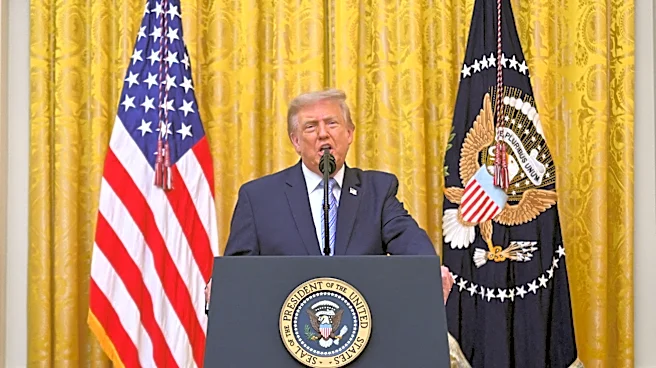






Brett Kavanaugh's nomination to the Supreme Court in 2018 was marked by significant political contention and procedural disputes, reflecting the high stakes involved in judicial appointments. President Donald Trump nominated Kavanaugh on July 9, 2018, following personal interviews with four United States Court of Appeals judges. Kavanaugh, in his initial public address after the nomination, emphasized the extensive consultation undertaken by the President in selecting
a nominee, stating, "No president has ever consulted more widely or talked with more people from more backgrounds to seek input about a Supreme Court nomination."
Senate Judiciary Committee Hearings and Document Disputes
The Senate Judiciary Committee scheduled public hearings for Kavanaugh's nomination to begin on September 4, 2018, initially planned for three or four days. However, these hearings faced immediate delays due to objections from Democratic members concerning the absence of records from Kavanaugh's tenure in the George W. Bush administration. Democrats also voiced complaints that a substantial volume of documents, specifically 42,000 pages, had only been received the night before the hearings were set to commence.
Republicans countered these objections by asserting that the quantity of documents made available for Kavanaugh's review was comparable to that provided for the previous five Supreme Court nominees. Democrats, however, maintained that only 15% of the documents they had requested regarding Kavanaugh had been supplied. Numerous motions put forth by Democrats to adjourn or suspend the hearings were ultimately ruled out of order by Chairman Chuck Grassley, who argued that Kavanaugh had authored over 300 legal opinions that were already accessible for review. The first day's session concluded after opening statements from each senator and the nominee, with question-and-answer periods slated to begin the following day.
Judicial Philosophy and Refusal to Comment
During the initial round of questioning from senators on September 5, 2018, Kavanaugh adhered to his previously stated position of not expressing opinions on matters that might potentially come before the Supreme Court. This stance led him to decline to promise recusal from any case, including those that might involve President Trump. He also refrained from commenting on issues such such as coverage of preexisting healthcare conditions, the possession of semiautomatic rifles, the landmark abortion rights case *Roe v. Wade*, or the president's power to self-pardon.
Kavanaugh did, however, elaborate extensively on various Constitutional amendments, the principle of *stare decisis* (the role of legal precedent in shaping subsequent judicial rulings), and the president's authority to dismiss federal employees. Throughout this session, frequent outbursts of protest from the audience necessitated security intervention and removal, alongside repeated procedural objections raised by Democratic senators.
Email Controversies and Precedent
The committee's third day of hearings was marked by controversy surrounding the release of emails from Kavanaugh related to concerns about potential racial profiling in security screenings. The day continued with Kavanaugh's efforts to articulate his jurisprudence, which included his refusal to answer direct questions he deemed hypothetical. Senator Chris Coons had submitted written questions to Kavanaugh regarding any knowledge of inappropriate behavior by Judge Alex Kozinski, for whom Kavanaugh had clerked, particularly concerning Kozinski's circulation of sexually explicit emails via his "Easy Rider Gag List." According to *The Intercept*, despite Coons' request for him to review his emails from Kozinski, Kavanaugh responded, "I do not remember." During his testimony, Kavanaugh described Kozinski's 2017 exposure as an alleged prolific sexual harasser as a surprising "gut punch." However, *The Guardian* reported that their sources disputed Kavanaugh's account, suggesting that Kozinski's alleged behavior was widely known within the judicial system and ultimately led to his abrupt resignation.
A 2003 email from Kavanaugh was released by the committee, in which he stated, "I am not sure that all legal scholars refer to [Roe v. Wade] as the settled law of the land at the Supreme Court level since Court can always overrule its precedent, and three current justices on the Court would do so." Kavanaugh clarified that he was commenting on the views of legal scholars at the time, not his personal views, and pointed out that *Roe v. Wade* had been reaffirmed multiple times since 2003. Senator Susan Collins indicated that Kavanaugh's statement did not contradict his personal assurance to her that *Roe* is settled law. Kavanaugh further noted that *Planned Parenthood v. Casey* (1992), which reaffirmed *Roe v. Wade*, represented "precedent on precedent," and was a key decision regarding when the Court's precedent might be overturned.