




The Battle of Plattsburgh, also known as the Battle of Lake Champlain, marked the end of the final British invasion of the northern United States during the War of 1812. This pivotal engagement, which occurred on September 11, 1814, near Plattsburgh, New York, involved both land and naval forces. The naval component, in particular, proved to be a critical turning point, with American forces employing innovative tactics to secure a victory that had
far-reaching implications for the war's outcome and subsequent peace negotiations. The battle showcased the strategic importance of Lake Champlain and the ingenuity of American naval command.
Macdonough's Strategic Preparations and Defensive Stance
Master Commandant Thomas Macdonough, leading the American naval squadron, recognized that his fleet was initially outgunned, especially in long-range artillery. To counter this disadvantage, he strategically withdrew his ships into Plattsburgh Bay. This maneuver forced the British to engage at close range, a distance at which the American and British squadrons were more evenly matched in terms of short-range carronades. Macdonough used the time before the British arrival to rigorously drill his sailors and meticulously prepare for a fight at anchor, demonstrating foresight and tactical acumen.
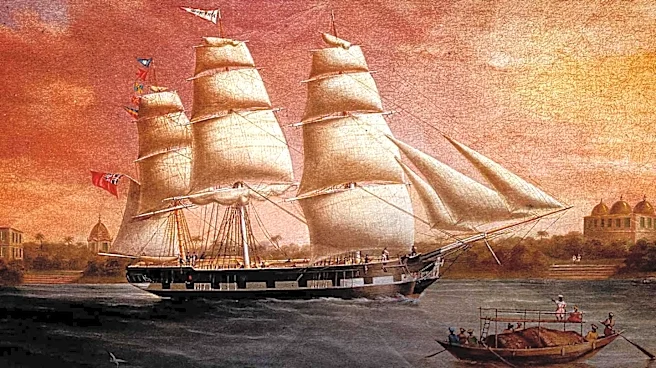
His preparations included anchoring his ships in a line from north to south, with the USS Eagle, Saratoga, Ticonderoga, and Preble in sequence. Each vessel was equipped with both bow and stern anchors, along with "springs" attached to the anchor cables. These springs allowed the ships to be rotated through a wide arc, providing flexibility in directing their firepower. Furthermore, Macdonough laid out extra kedge anchors from the quarters of his flagship, the Saratoga, a brilliant innovation that would later enable him to spin the ship completely around, bringing fresh broadsides to bear. The ten American gunboats were strategically positioned in the intervals between the larger vessels, ready to support the main line.
The British Approach and Downie's Fatal Engagement
The British squadron, under Captain George Downie, faced challenges even before the engagement began. Commander Pring's sloops and gunboats were already on the lake, but the frigate Confiance had to be laboriously towed up the Sorel River against both wind and current, delaying Downie's arrival until September 9. Even then, carpenters and riggers were still working on the frigate, and its crew was incomplete, augmented by a company of the 39th Foot. Prevost, the British land commander, was furious when Downie was unable to attack on September 10 due to unfavorable winds.
However, the wind shifted to the northeast during the night, making an attack feasible on September 11. In the early hours, the British squadron sailed, announcing their presence by "scaling" their guns to clear rust from the barrels. Around 9 a.m., the British squadron rounded Cumberland Head, with the larger ships initially in the order Chubb, Linnet, Confiance, and Finch, and the gunboats to the south. The light and variable wind prevented Downie from maneuvering Confiance to his intended position across the head of Macdonough's line. As Confiance sustained increasing damage, Downie was forced to drop anchor between 300 and 500 yards from Macdonough's flagship, Saratoga. He then deliberately secured everything before firing a broadside that killed or wounded one-fifth of Saratoga's crew. Tragically for the British, Downie himself was killed shortly after, crushed by a cannon flung from its carriage by a shot from Saratoga.
Turning the Tide: Macdonough's Ingenuity and British Surrender
The battle raged on, with significant damage inflicted on both sides. The British sloop Chubb was severely damaged and drifted into the American line, where its commander surrendered. The brig Linnet, commanded by Pring, reached the head of the American line and delivered a raking fire against the Eagle. At the tail of the line, the sloop Finch ran aground on Crab Island and surrendered under fire from a 6-pounder gun manned by invalids from Macomb's hospital. Half of the British gunboats were heavily engaged, forcing the weakest American vessel, Preble, to retreat, though Ticonderoga successfully fended them off.
A pivotal moment arrived when both flagships, Saratoga and Confiance, had fought each other to a standstill. Aboard Saratoga, almost all the starboard-side guns were dismounted or rendered inoperable. Macdonough, demonstrating his earlier foresight, ordered the bow anchor cut and hauled in the kedge anchors he had laid out. This allowed him to spin Saratoga around, bringing its undamaged port battery into action. Confiance, unable to return fire, attempted a similar maneuver but only succeeded in presenting its vulnerable stern to the American broadside. Helpless, Confiance surrendered. Macdonough then further adjusted his kedge anchors to bring his broadside to bear on Linnet, which, after being battered almost into sinking, also surrendered. The remaining British gunboats withdrew unmolested. The surviving British officers, upon boarding Saratoga to offer their swords, were met with Macdonough's gracious reply,