




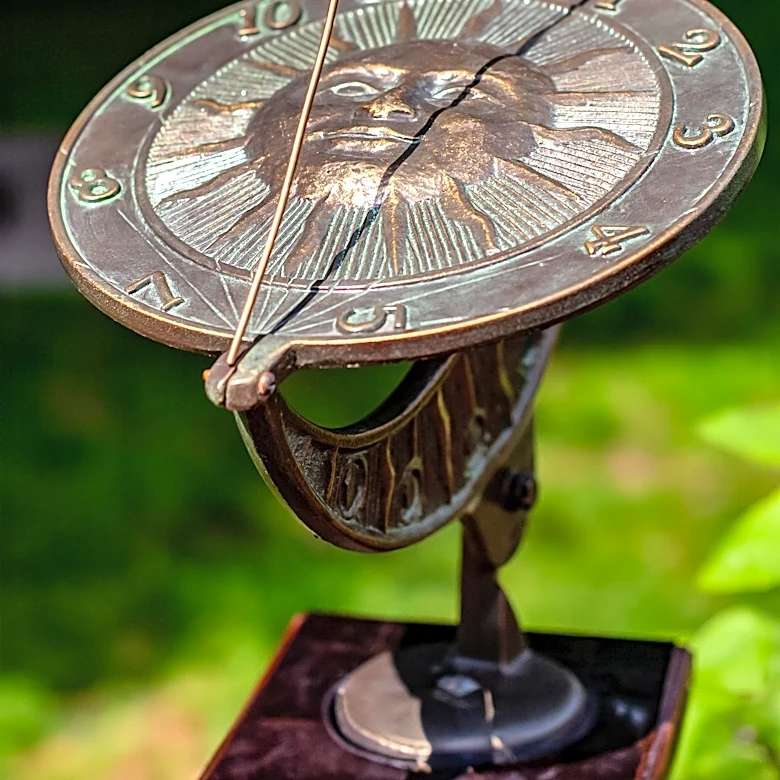


Before the late 19th century, timekeeping in the United States was a localized affair, with each town often setting its clocks based on local solar time. This system, while functional for a largely agrarian society with limited long-distance travel, became increasingly problematic with the advent and expansion of railroads. The need for a standardized system became critical to ensure safety and efficiency across the burgeoning rail networks. The transition
from a multitude of local times to a unified system of time zones was a complex process, driven by practical necessity and eventually enshrined in federal law.
The Chaos of Local Times and Early Accidents
The absence of a standardized time system led to significant confusion and, tragically, accidents. One of the earliest reported incidents that highlighted this critical need occurred in New England in August 1853. The Valley Falls train collision involved two trains heading towards each other on the same track. The conductors had different times set on their watches, a direct consequence of the varied local times, resulting in the deaths of 14 passengers. This tragic event spurred immediate action, leading to the coordination of railway schedules in New England shortly thereafter.
Numerous other collisions further underscored the urgency of the situation, prompting railway companies to form the General Time Convention. This committee was established with the specific goal of agreeing on scheduling practices to prevent future mishaps. The problem was not merely one of convenience; it was a matter of life and death, as the differing local times made it nearly impossible to accurately coordinate train movements across distances.
William Frederick Allen's Vision for Time Zones
In 1870, Charles F. Dowd, who was not directly involved with the railway movement or civil authorities, proposed a system of national times for railroads. His idea involved a single time for railways while allowing towns to retain their local times. Although this initial proposal did not gain favor with railway managers, the concept of standardization continued to evolve. By 1881, railway managers agreed to investigate the idea further, tasking William Frederick Allen with the study.
Allen, who served as the secretary of the General Time Convention and was the managing editor of the Travellers' Official Guide to the Railways, developed a more comprehensive solution. He proposed replacing the existing 50 railway times with five distinct time zones. Allen successfully persuaded railway managers and city politicians, particularly those in cities with multiple railway stations, that adopting his simpler proposals was in their best interest. His plan aligned the new time zones with cities' railroad stations, a strategic move designed to preempt the imposition of potentially more costly and cumbersome arrangements by state legislators and naval authorities, both of whom initially favored the retention of local times.
Implementation and Public Reaction
On October 11, 1883, a pivotal convention of railroad executives met in Chicago at the General Time Convention, which was later renamed the American Railway Association. At this meeting, they formally agreed to implement five time zones across North America, using Greenwich Mean Time as a foundational reference. This decision marked a significant step towards national time standardization.
Despite the widespread support from railway companies, most cities, and influential institutions like Yale and Harvard, the imposition of railway time was not universally welcomed. Many smaller towns and cities expressed opposition, viewing it as an infringement on their local customs. For instance, on November 17, 1883, the Indianapolis Sentinel published a lament, stating that "the sun is no longer to boss the job" and that people would now have to "eat, sleep, and work by railroad time... people will have to marry by railroad time... ministers will be required to preach by railroad time." This sentiment highlighted the cultural shift and the perceived loss of local autonomy that came with the new system.
The Dawn of Standard Railway Time
Regardless of the pockets of resistance, standard railway time was officially introduced at noon on November 18, 1883. The consensus among the powerful railway industry and major institutions proved strong enough to overcome local objections. This new system, born out of necessity and championed by figures like William Frederick Allen, fundamentally altered how Americans perceived and organized their daily lives. The standardization of time, initially driven by the practical demands of railroad operations, eventually gained widespread acceptance and became deeply ingrained in the national fabric.
This foundational agreement, established in 1883, held firm and was eventually incorporated into federal law in 1918. The journey from a chaotic array of local times to a unified system of time zones was a testament to the transformative power of industrialization and the collaborative efforts required to adapt to new technologies. The legacy of railway time continues to shape the daily rhythms of the United States, a silent reminder of the era when the iron horse dictated the nation's clocks.