







The Apollo 12 mission was a pivotal moment for lunar science, not only demonstrating precision landing capabilities but also deploying a sophisticated suite of scientific instruments and retrieving parts of a previous robotic probe. The Apollo Lunar Surface Experiments Package (ALSEP) represented a significant upgrade in scientific data collection compared to Apollo 11, designed for long-term autonomous operation. Furthermore, the mission's successful
visit to the Surveyor 3 probe provided invaluable insights into the effects of the lunar environment on man-made objects. These scientific endeavors laid crucial groundwork for future lunar exploration and our understanding of Earth's closest celestial neighbor.
The Apollo Lunar Surface Experiments Package (ALSEP)
Apollo 12 was the first mission to carry and deploy a full Apollo Lunar Surface Experiments Package (ALSEP). This suite of scientific instruments was designed to be emplaced on the lunar surface by astronauts and then operate autonomously, transmitting data back to Earth. The development of ALSEP was partly a response to scientists who argued that robotic craft could explore the Moon more cheaply, demonstrating that certain tasks, such as ALSEP deployment, required human intervention. The Bendix Corporation was awarded the contract to design and build the ALSEPs in 1966. While Apollo 11 carried a smaller Early Apollo Surface Experiment Package (EASEP) due to limited surface time, Apollo 12 initiated the deployment of the more comprehensive ALSEP, which would be a feature of subsequent lunar landing missions, though the specific components varied.
Apollo 12's ALSEP was deployed at least 300 feet (91 meters) away from the Lunar Module (LM) to protect the instruments from debris generated during the LM's ascent stage liftoff. The Central Station of the ALSEP housed a transmitter, receiver, timer, data processor, and equipment for power distribution and control. Power was supplied by SNAP-27, a radioisotope thermoelectric generator (RTG) developed by the Atomic Energy Commission. This RTG, containing plutonium, marked the first use of atomic energy on a crewed NASA spacecraft. The plutonium core was transported from Earth in a cask attached to an LM landing leg, designed to survive re-entry in case of an aborted mission. This design proved robust when a similar cask on Apollo 13 survived re-entry and sank in the Tonga Trench without apparent radioactive leakage.
A Suite of Lunar Detectors
The ALSEP deployed by Apollo 12 included several key experiments. The Lunar Surface Magnetometer (LSM) was designed to measure the magnetic field at the Moon's surface. The Lunar Atmosphere Detector (LAD), also known as the Cold Cathode Gauge Experiment, aimed to measure the density and temperature of the thin lunar atmosphere and its variations. The Lunar Ionosphere Detector (LID), or Suprathermal Ion Detector Experiment (SIDE), studied charged particles in the lunar atmosphere. The Solar Wind Spectrometer measured the strength and direction of the solar wind at the Moon's surface, complementing the free-standing Solar Wind Composition Experiment, which measured the composition of the solar wind and was returned to Earth by the astronauts. A Dust Detector monitored the accumulation of lunar dust on the equipment.
Perhaps one of the most significant ALSEP components was the Passive Seismic Experiment (PSE), a seismometer designed to measure moonquakes and other movements in the Moon's crust. This seismometer was calibrated by the planned impact of the Apollo 12 LM's ascent stage, an object of known mass and velocity hitting the Moon at a known location. This impact was projected to be equivalent to the explosive force of one ton of TNT, providing valuable data about the Moon's internal structure. The ALSEP experiments were activated from Earth on November 19, 1969. While the LAD returned only a small amount of useful data due to a power supply failure, other instruments like the LSM continued to operate for years. All powered ALSEP experiments that remained active were eventually deactivated on September 30, 1977, primarily due to budgetary constraints.
The Surveyor 3 Encounter
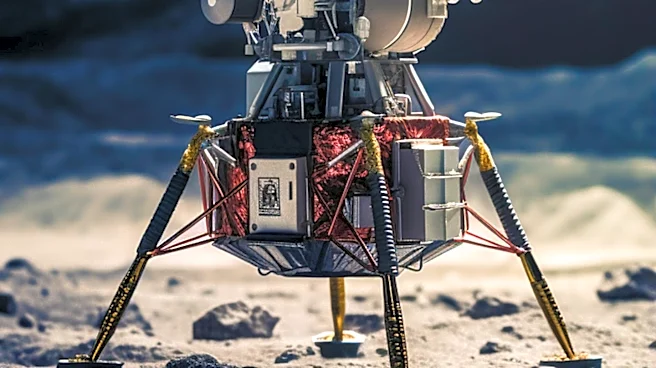
A unique scientific objective of Apollo 12 was the precision landing near and subsequent visit to the Surveyor 3 robotic probe, which had landed on the Moon in April 1967. This allowed astronauts Pete Conrad and Alan Bean to collect parts of the probe for return to Earth. They carefully approached Surveyor 3, descending into its shallow crater and following a contour to reach the craft. They found the footing solid and the probe stable. They collected several pieces, including the television camera, as well as rocks that Surveyor 3 had previously studied via television. The analysis of these retrieved parts provided scientists with direct evidence of how materials degrade in the harsh lunar environment over an extended period, offering crucial data for designing future spacecraft and habitats.