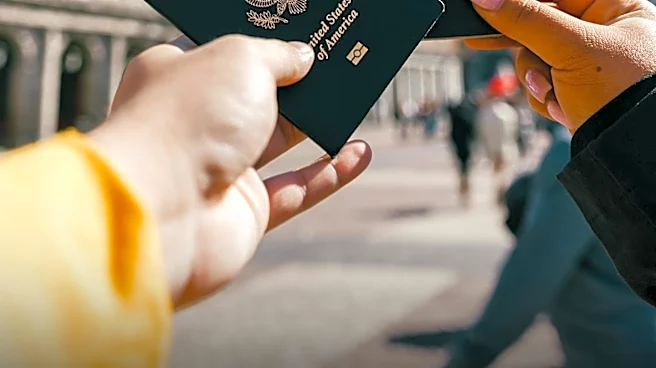











U.S. passports are more than just travel documents; they are essential tools for international travel and border security. Over the years, the role of passports has expanded from simple identification to a critical component of global mobility and security. This article explores how U.S. passports facilitate international travel and contribute to border security.
Facilitating International Travel
A U.S. passport serves as conclusive proof of U.S. citizenship, allowing its bearer to
enter and temporarily reside in foreign countries. This document is essential for accessing local aid and protection, as well as obtaining consular assistance from the U.S. government. The passport's role in facilitating travel is underscored by its requirement for entry and exit from the United States, as mandated by a 1978 amendment to the Immigration and Nationality Act of 1952.
The design and features of U.S. passports have evolved to meet the demands of international travel. Early passports were large, diploma-like documents, but modern passports are compact booklets with machine-readable and biometric features. These advancements have streamlined the travel process, making it easier for travelers to navigate international borders.
Enhancing Border Security
U.S. passports play a vital role in border security by verifying the identity and nationality of travelers. The introduction of machine-readable and biometric features has significantly enhanced the security of these documents, making them more difficult to forge. These features include a microprocessor chip that stores biometric data, such as facial recognition, fingerprint recognition, and iris recognition.
The International Civil Aviation Organization (ICAO) has established standards for biometric passports, ensuring interoperability between countries and manufacturers. This standardization has improved the efficiency and security of border control systems worldwide, allowing for more accurate and reliable verification of travelers' identities.
The Future of U.S. Passports
As international travel and security concerns continue to evolve, so too will the role of U.S. passports. The ongoing development of biometric and electronic features will likely lead to even more secure and efficient travel documents. These advancements will not only enhance the travel experience for U.S. citizens but also contribute to global efforts to combat identity fraud and improve border security.
In conclusion, U.S. passports are indispensable tools for international travel and security. Their evolution from simple identification documents to sophisticated travel tools reflects the changing landscape of global mobility and security. As technology continues to advance, U.S. passports will remain at the forefront of efforts to facilitate safe and secure international travel.