


Yoga features several poses inspired by animals, and among the most prominent are those named after dogs and snakes: Downward Dog, Upward Dog, and Cobra Pose. While all three are integral to various yoga practices, they each possess distinct characteristics, benefits, and roles within sequences like Surya Namaskar, the Salute to the Sun. Understanding the nuances of these poses reveals the rich diversity within yoga as exercise, from inversions to backbends,
and how they contribute to a holistic practice. These poses, though sometimes confused or used interchangeably in certain contexts, are fundamentally different in their physical execution and the sensations they create in the body.
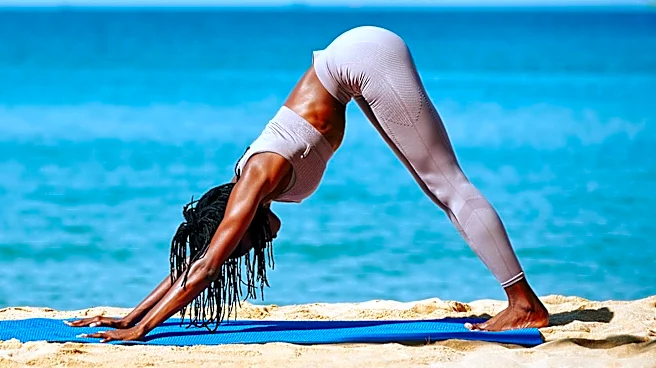
Downward Dog Pose, or Adho Mukha Shvanasana, is an inversion asana where the head is down, ideally touching the floor. The body's weight is supported by the palms and feet, with arms stretched forward, shoulder-width apart, and legs straight, hips raised high. This pose is known for stretching the hamstrings and calves and strengthening the shoulders. It is often a transitional pose in flowing sequences. In contrast, Upward Dog Pose, or Urdhva Mukha Shvanasana, is a reclining back-bending asana. It is entered from a prone position, or from Chaturanga Dandasana or Ashtanga Namaskara in a Surya Namaskar cycle, with feet slightly apart and toes untucked. The legs are stretched straight, and the body's weight is supported on the hands with outstretched arms, lifting the hips off the ground. The gaze is directed straight upwards, arching the neck and back. A key distinction is that in Upward Dog, the hips, thighs, and knees are lifted slightly off the ground, unlike Cobra Pose where the legs remain grounded.
Cobra Pose: A Grounded Backbend
Cobra Pose, or Bhujangasana, is another reclining back-bending asana. It can be entered from a prone position or from Downward Dog. The palms are placed under the shoulders, pushing down until the hips lift slightly. The backs of the feet rest on the ground, and the legs are outstretched. The gaze is directed forwards in the preparatory pose. For the full pose, the back is arched until the arms are straight, and the gaze is directed straight upwards or slightly backward. A crucial difference from Upward Dog is that in Cobra Pose, the legs remain on the ground. Cobra Pose is often included in Surya Namaskar as an alternative to Upward Dog. It is believed to help alleviate menstrual cramps by gently stretching the abdomen and lower back, promoting relaxation of surrounding muscles, and improving pelvic circulation.
Variations and Preparatory Poses
Both Cobra Pose and Downward Dog have variations to accommodate different levels of practitioners. For Cobra Pose, an easier variant is Sphinx Pose, sometimes called Salamba Bhujangasana, where the forearms rest on the ground, creating a gentler backbend. Sphinx Pose is used in the long holds of Yin Yoga, either with forearms on the ground or with straightened arms. Salabhasana (Locust Pose) or Sphinx Pose can also be used to prepare for Bhujangasana. For Downward Dog, variations include bending the knees, supporting the heels with props, or modifying arm and leg positions. The King Cobra, Raja Bhujangasana, is an advanced variation of Cobra Pose, where practitioners arch their head, neck, and chest backward, aiming to bring the chest close to a horizontal plane and eventually placing the feet on the head. These variations demonstrate the adaptability of these poses, allowing practitioners to progress and modify their practice according to their needs and abilities.
Integration into Yoga Sequences
All three poses play significant roles in various yoga sequences. Downward Dog is a staple in many flowing sequences, particularly Surya Namaskar. Upward Dog is also a common component of Surya Namaskar, often following a Chaturanga Dandasana. Cobra Pose serves as an alternative to Upward Dog in some forms of Surya Namaskar. The interplay between these poses, moving from an inversion like Downward Dog to backbends like Upward Dog and Cobra, creates a dynamic and balanced practice. The specific instructions for each pose, such as the position of the hips and legs, are critical for proper alignment and to achieve the intended benefits. The careful sequencing and execution of these poses contribute to the overall effectiveness and experience of a yoga practice.