






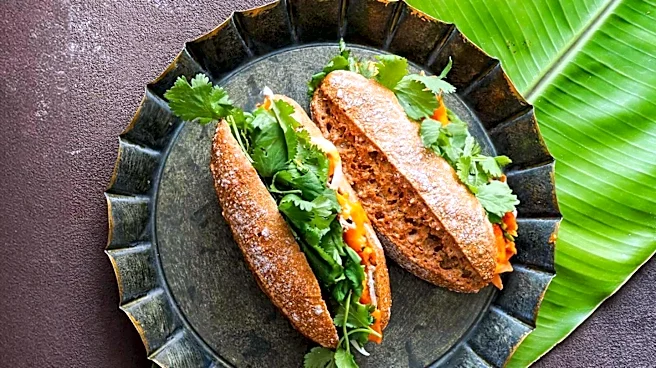
Bánh mì, a beloved Vietnamese sandwich, has a rich history that traces back to the mid-19th century when the French introduced the baguette to Vietnam. Over time, this culinary import evolved into a distinctly Vietnamese creation, blending local flavors with French bread-making techniques. This article explores the transformation of bánh mì from a colonial influence to a staple of Vietnamese cuisine.
French Beginnings
The story of bánh mì begins in the mid-19th century
during the Nguyễn dynasty when the French introduced the baguette to Vietnam. Initially, the baguette was considered a luxury item due to the high cost of imported wheat. However, during World War I, disruptions in wheat imports led Vietnamese bakers to mix rice flour with wheat, making the bread more affordable and accessible. This adaptation not only reduced costs but also resulted in a lighter, fluffier bread that became popular among the Vietnamese.
By the early 20th century, the baguette had become a staple food in Vietnam, primarily consumed for breakfast with butter and sugar. The French influence was evident in the early versions of bánh mì, which closely resembled French sandwiches, typically filled with jambon-beurre and pâté.
Vietnamese Transformation
The 1950s marked a significant turning point in the evolution of bánh mì. As Saigon's cuisine transformed with the influx of migrants from North Vietnam, local vendors began to experiment with the sandwich, adding Vietnamese ingredients such as herbs, pickles, and chiles. This fusion of flavors resulted in the creation of bánh mì Sài Gòn, a popular street food that captured the essence of Vietnamese culinary creativity.
One of the first shops to sell bánh mì thịt, a meat-filled version of the sandwich, was Hòa Mã, opened by migrants Lê Minh Ngọc and Nguyễn Thị Tịnh in 1958. This innovation paved the way for bánh mì to become a versatile dish, with various fillings ranging from chả (Vietnamese sausage) to phá lấu (braised offal).
Global Spread and Recognition
Following the Vietnam War, bánh mì gained international recognition as Vietnamese communities abroad introduced the sandwich to countries like Australia, Canada, and the United States. In the U.S., bánh mì became a popular offering in Asian bakeries, and Vietnamese Americans played a crucial role in popularizing it among both Vietnamese and non-Vietnamese consumers.
In Northern California, the Lê family, through their food truck services and fast-food chain Lee's Sandwiches, helped bánh mì gain mainstream appeal. The sandwich's unique blend of flavors and textures even inspired local variations, such as the "Vietnamese po' boy" in New Orleans and the "Vietnamese hoagie" in Philadelphia.
Today, bánh mì is celebrated worldwide, with its inclusion in the Oxford English Dictionary and recognition through a Google Doodle. Its journey from a French colonial import to a global culinary icon is a testament to the adaptability and creativity of Vietnamese cuisine.