


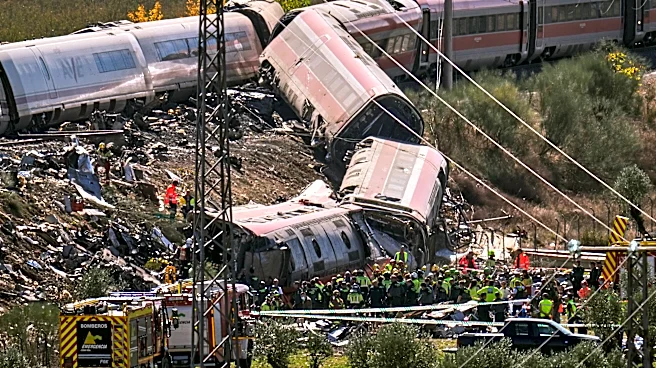
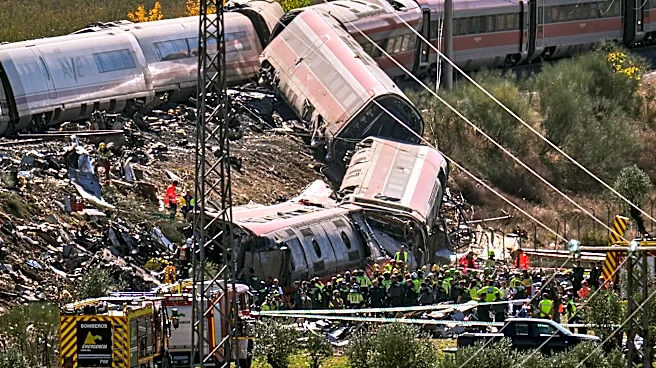

The 1972 Chicago commuter rail crash, the worst in the city's history, was not a singular event but rather the tragic culmination of several operational failures and human errors. Occurring on October 30, 1972, during the morning rush hour, the collision between Illinois Central Gulf Train 416 and Train 720 resulted in 45 fatalities and 332 injuries. A detailed examination of the incident reveals a series of critical safety lapses, from disregarded
railroad rules to issues with signal interpretation and train speed, all contributing to the catastrophic outcome.
The Critical Failure of Flag Protection
At the heart of the disaster was the decision by the crew of Train 416 to back up without proper flag protection. After overshooting the 27th Street station, the engineer sought and received permission from the conductor to reverse the train to the platform. However, this maneuver was executed in direct violation of the railroad's established rules, which mandated flag protection for such movements. The absence of a flagman meant there was no visual warning for any approaching trains on the same track.
Investigations revealed that while flag protection was a prescribed practice, it had fallen out of regular use among the train's crew. Instead of deploying a flagman, the conductor and engineer attempted to coordinate the backward movement themselves. This decision was further complicated by a curve in the track, which partially obstructed their view, making it even more imperative to have external safety measures in place. The reliance on an informal, unapproved method over a critical safety protocol proved to be a fatal misjudgment.
Signal Interpretation and Train Speed
Another significant factor contributing to the collision involved the automatic block signals and the speed of the oncoming express Train 720. As Train 416 backed into the signal block, it effectively cleared the signals for Train 720, allowing the express train to continue at full speed on the same track. This created a dangerous scenario where one train was moving in reverse, unprotected, while another was approaching rapidly with a clear signal.
The engineer of Train 720, operating under the assumption of a clear track, did not see the bilevel train backing up until it was too late to prevent the collision. Later analyses suggested that if Train 720 had been traveling at a slower speed, specifically around 30 mph, its engineer likely would have had sufficient time to observe the red light for Train 416 and potentially avert the disaster. However, Train 720 was estimated to have struck Train 416 at a much higher speed, between 44 and 50 mph, significantly reducing any chance of a last-minute avoidance.
The Impact of Car Construction and Proximity to Hospitals
The physical characteristics of the trains also played a role in the severity of the outcome. Train 720 was composed of more heavily constructed single-level cars, while Train 416 consisted of newly purchased Highliners. When the trains collided, the front car of the express train telescoped into the rear car of the bilevel train. This telescoping effect is particularly destructive, leading to extensive damage and high casualties, which accounted for the 45 deaths and 332 injuries.
Despite the high death toll, the immediate aftermath could have been even more dire. The accident occurred near Michael Reese Hospital and Mercy Hospital. The close proximity of these medical facilities allowed for rapid response and treatment of the numerous injured passengers. This fortunate geographical detail likely mitigated an even greater loss of life, underscoring how external factors can influence the final human cost of such a disaster.



