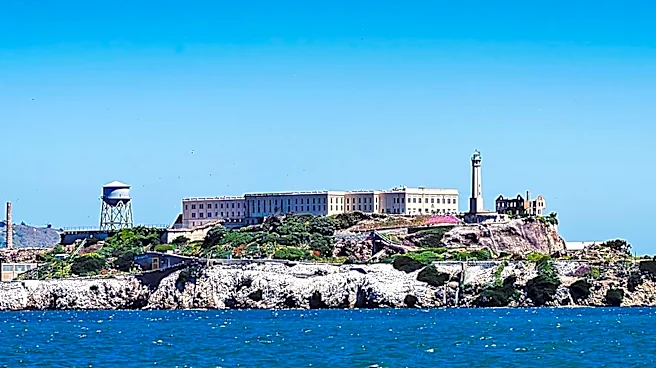




Alcatraz Island, located in San Francisco Bay, has a rich history that spans several decades. Initially used as a military fort, it later became one of the most infamous federal penitentiaries in the United States. This transformation reflects broader changes in American society and its approach to crime and punishment. Understanding this evolution provides insight into the island's unique role in American history.
Early Military Use
Alcatraz Island's strategic location
made it an ideal site for military use. In the mid-19th century, the U.S. Army began fortifying the island to protect San Francisco Bay. By 1859, Alcatraz was equipped with a citadel and numerous cannons, serving as a key defense point during the American Civil War. The fort's primary purpose was to deter enemy ships from entering the bay, and it played a crucial role in maintaining the security of the region.
During this period, Alcatraz also functioned as a military prison. Soldiers who committed crimes were held on the island, and by 1861, it housed Civil War prisoners of war. The military prison expanded over the years, with additional cells constructed to accommodate the growing number of inmates. This early use of Alcatraz as a detention facility set the stage for its later transformation into a federal penitentiary.
Transition to a Federal Penitentiary
In the early 20th century, the U.S. Army's use of Alcatraz began to decline. The military's budget constraints and a smaller peacetime force made maintaining the island less feasible. As a result, the Army transferred control of Alcatraz to the Department of Justice in 1933. The Bureau of Prisons sought a high-security facility to house the most dangerous criminals, and Alcatraz's isolated location made it an ideal choice.
The transition involved significant modernization efforts. Between 1933 and 1934, the existing military prison was upgraded to meet federal standards. The new Alcatraz Federal Penitentiary opened in August 1934, marking the end of the island's military era. The facility was designed to be escape-proof, with enhanced security measures and a reputation for housing the nation's most notorious criminals.
The Legacy of Alcatraz
Alcatraz Federal Penitentiary operated until 1963, when it closed due to high operational costs and deteriorating infrastructure. Despite its relatively short tenure as a federal prison, Alcatraz left a lasting legacy. It became synonymous with maximum security and harsh conditions, earning a reputation as a place of last resort for the most incorrigible inmates.
Today, Alcatraz Island is a popular tourist destination managed by the National Park Service. Visitors can explore the remnants of its military and penitentiary past, gaining a deeper understanding of its historical significance. The island's transformation from a military fort to a federal penitentiary reflects broader changes in American society and continues to captivate the public's imagination.