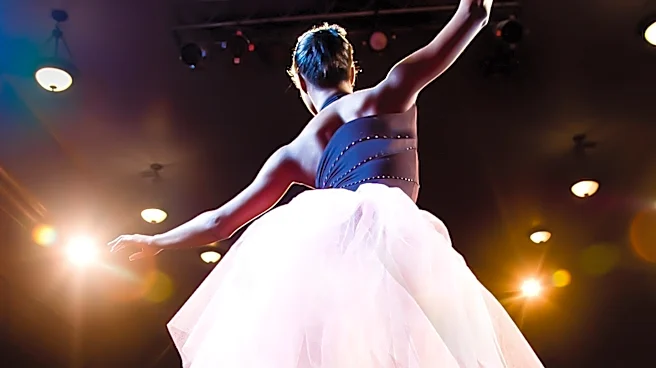







Janet Faye Collins, a name synonymous with grace and resilience in the world of dance, extended her influence far beyond her groundbreaking performances as a prima ballerina. While her historic tenure at the Metropolitan Opera marked a significant turning point for Black dancers, Collins's legacy is also deeply rooted in her dedication to teaching, her artistic pursuits as a painter, and her profound spiritual commitment. Her life story illustrates
a multifaceted individual who contributed to culture and society in various capacities, leaving an indelible mark on those she encountered and the institutions she shaped.
Collins's journey began in New Orleans and led her to Los Angeles at a young age, where she received her initial dance training. She studied with a select group of teachers, including Carmelita Maracci, Lester Horton, and Adolph Bolm, who were notable for accepting Black students during a time of widespread segregation. This early exposure to diverse teaching styles and her inherent talent laid the groundwork for a career that would challenge norms and inspire many.
Nurturing Future Generations: A Dedicated Educator
Following her illustrious performing career, Janet Collins transitioned seamlessly into the role of an educator, a testament to her commitment to the art form. She became a respected teacher of modern dance, sharing her expertise at two prominent institutions in New York City: Balanchine's School of American Ballet and Marymount Manhattan College. Her teaching tenure spanned from 1951 until 1972, a period during which she undoubtedly influenced countless aspiring dancers.
At these esteemed schools, Collins imparted not only technical skills but also the artistic discipline and passion that characterized her own performances. Her presence as a Black woman in such influential teaching positions further solidified her role as a pioneer, demonstrating that excellence and leadership in dance were not confined by racial barriers. Through her teaching, she helped shape the future of American dance, ensuring that her knowledge and artistry would continue to resonate through new generations of performers.
Artistic Expression Beyond Dance and Spiritual Devotion
Janet Collins's creative spirit was not limited to the stage or the classroom; she was also an accomplished painter. This artistic endeavor provided another avenue for her expression, showcasing a breadth of talent that extended beyond the physical demands of ballet and choreography. Her work as a painter suggests a deep well of creativity that sought various outlets, enriching her life and offering a different perspective on her artistic sensibilities.
In 1974, Collins made a significant personal decision to retire from both performing and teaching. She chose to devote herself fully to her Catholic religion, finding solace and purpose as an oblate in the Benedictine Order. This spiritual commitment marked a new chapter in her life, highlighting a profound inner journey and a dedication to faith that became central to her later years. Her decision to embrace a religious life after a demanding public career speaks to the depth of her character and her search for meaning beyond worldly achievements.
Collins's final years saw her move from Seattle to Fort Worth in 2000 to be closer to her brother, Ernest Patrick Collins. She passed away in Fort Worth, Texas, in 2003 at the age of 86. Her life, marked by artistic brilliance, pioneering achievements, and spiritual devotion, continues to inspire, reminding us of the power of perseverance and the diverse ways in which an individual can leave a lasting impact on the world.