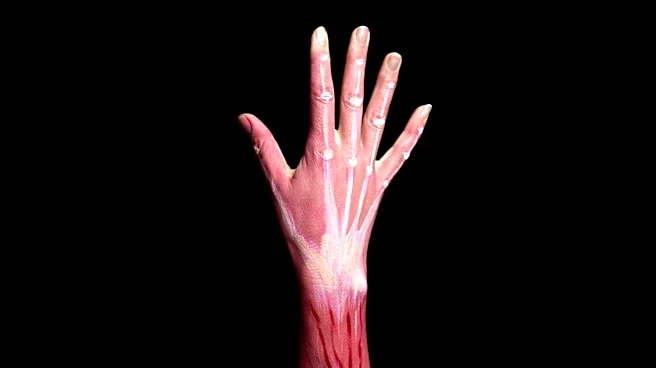







In human anatomy, the palmar interossei muscles are a group of small, yet crucial, muscles located within the hand. These muscles play a significant role in the intricate movements of the fingers, contributing to both adduction and flexion. Typically, there are four such muscles, though one, specifically associated with the thumb, is occasionally absent. Their strategic placement between the metacarpal bones allows them to exert precise control over
finger positioning and movement, which is vital for a wide range of daily activities.
Structural Characteristics and Location
The palmar interossei muscles are characterized by their unipennate structure. This means that their muscle fibers are arranged obliquely to their tendon, similar to the barbs of a feather, which allows for a greater number of muscle fibers to be packed into a given area, enhancing their force production. These muscles are situated between the metacarpal bones, which form the main body of the hand. Their origins are along the shaft of the metacarpal bone of the digit they act upon, providing a stable base for their contractions.
Each palmar interosseous muscle inserts into two key areas: the base of the proximal phalanx and the extensor expansion of the extensor digitorum of the same digit. The proximal phalanges are the bones closest to the palm in each finger, while the extensor expansion is a fibrous sheet on the back of the fingers that helps coordinate the action of the extensor muscles. This dual insertion mechanism allows the palmar interossei to influence both the metacarpophalangeal joints (knuckles) and the interphalangeal joints (finger joints).
Specifics of the Pollical Palmar Interosseous
Among the palmar interossei, the first palmar interosseous muscle, often referred to as the "pollical" palmar interosseous muscle (PPIM), is unique due to its association with the thumb. This muscle is found on the medial side of the thumb, meaning towards the center of the hand. It passes between the first dorsal interosseous muscle and the oblique head of the adductor pollicis, another muscle involved in thumb movement. Its insertion point is on the base of the thumb's proximal phalanx, alongside the adductor pollicis.
The presence of the pollical palmar interosseous muscle is notable because it is not universally present in all individuals, though it is found in over 80% of people. Its existence was first described by Henle in 1858 and has since been confirmed by numerous anatomists. However, some anatomists have either not mentioned it or have considered it to be part of other thumb muscles, such as the adductor pollicis or flexor pollicis brevis. It is important to distinguish it from these, as the deep head of the flexor pollicis brevis originates from the thumb's ulnar sesamoid bone, and the oblique portion of the adductor pollicis originates from several carpal bones and the bases of the second and third metacarpal bones, not the first metacarpal, which is the origin for the PPIM.
Functional Role in Finger Movement
The primary function of the palmar interossei muscles is to adduct the fingers. Adduction refers to the movement of a digit towards the midline of the hand. In the context of the fingers, this means bringing them closer together. This action is crucial for gripping, holding small objects, and performing fine motor tasks that require precision and control. For instance, when holding a pen or picking up a coin, the palmar interossei work to stabilize and position the fingers accurately.
Beyond adduction, these muscles also contribute to the flexion of the proximal phalanges and the extension of the middle and distal phalanges. This combined action, often referred to as the "lumbrical grip," is essential for many hand movements. The palmar interossei, along with other intrinsic hand muscles, enable the complex and coordinated movements that make the human hand so versatile. Their ability to precisely control finger positioning is fundamental to the dexterity and manipulative capabilities of the hand.