





Larry Holmes, often hailed as one of the greatest heavyweights of all time, carved out a remarkable career that saw him rise from humble beginnings to become a dominant force in professional boxing. Born on November 3, 1949, Holmes grew up in Easton, Pennsylvania, earning him the nickname "the Easton Assassin." His early life was marked by hardship; he dropped out of school in the seventh grade to work and help support his family, taking jobs at a car wash,
driving a dump truck, and working in a quarry. These experiences forged a resilient spirit that would define his boxing career. Holmes's journey to the top was not just about winning titles; it was about overcoming adversity and proving his mettle against the sport's legends, including his former mentor, Muhammad Ali.
The Apprenticeship of a Champion
Holmes began boxing at the age of 18, eventually turning professional on March 21, 1973. Early in his career, he gained invaluable experience as a sparring partner for some of the era's most iconic heavyweights, including Muhammad Ali, Joe Frazier, Earnie Shavers, and Jimmy Young. This period was crucial for Holmes's development. He was paid well for his sparring sessions and, more importantly, learned a great deal from these champions. Holmes himself reflected on this time, noting that he was young and inexperienced but could hold his own against the best. This realization fueled his ambition, making him believe that if he could compete with them then, he could achieve greatness later.
His first significant step towards becoming a contender came in March 1978 when he upset the hard-hitting Earnie Shavers. Holmes secured a lopsided twelve-round unanimous decision, winning nearly every round on the judges' scorecards. This victory set the stage for his first world title shot against WBC Heavyweight Champion Ken Norton in June 1978, a fight he won by a split decision over fifteen rounds at Caesars Palace in Las Vegas, marking the beginning of his reign as a world champion.
Defending the Crown and Facing Ali
After winning the WBC title, Holmes embarked on a series of successful defenses. He had a rematch with Earnie Shavers in September 1979, dominating the early rounds before being knocked down in the seventh. Holmes recovered, survived the round, and went on to stop Shavers in the eleventh. His subsequent defenses included knockouts of Lorenzo Zanon, Leroy Jones, and Scott LeDoux. By October 1980, Holmes was a formidable champion with a 35-0 record, including 26 knockouts.
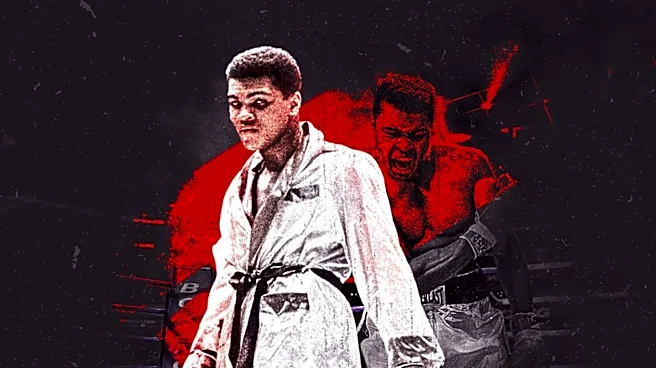
His most famous defense came on October 2, 1980, against Muhammad Ali, his former mentor. Ali, at 38, was attempting a comeback to become the first four-time world heavyweight champion. Holmes dominated the fight, winning every round on all three judges' scorecards. In the tenth round, Ali's trainer stopped the fight, giving Holmes a technical knockout victory. This was the only stoppage defeat of Ali's career. Holmes, despite his victory, showed profound sadness, with tears in his eyes during a post-fight interview, expressing immense respect for Ali. This win solidified Holmes's status as a legitimate world heavyweight champion, earning him recognition from The Ring magazine.
A Legacy of Dominance
Holmes continued his reign, holding the WBC heavyweight title until 1983, and the Ring magazine and lineal heavyweight titles from 1980 to 1985. He also became the inaugural IBF heavyweight champion from 1983 to 1985. His left jab is frequently cited as one of the best in heavyweight boxing history. Holmes's career record of 48-0 before his first loss placed him just one win shy of Rocky Marciano's undefeated 49-0 mark. He has been inducted into both the International Boxing Hall of Fame and the World Boxing Hall of Fame, cementing his legacy as one of boxing's all-time greats. His journey from a struggling youth to a dominant world champion, culminating in his poignant victory over Ali, remains a testament to his skill, perseverance, and enduring impact on the sport.